If Your Roof
Leaks at a Few Seams, Curbs, or Drains
Water that shows up in two or three spots usually traces to a lap, a pipe boot, or a drain clamp we can fix.
Start WithCommercial Roof Repair
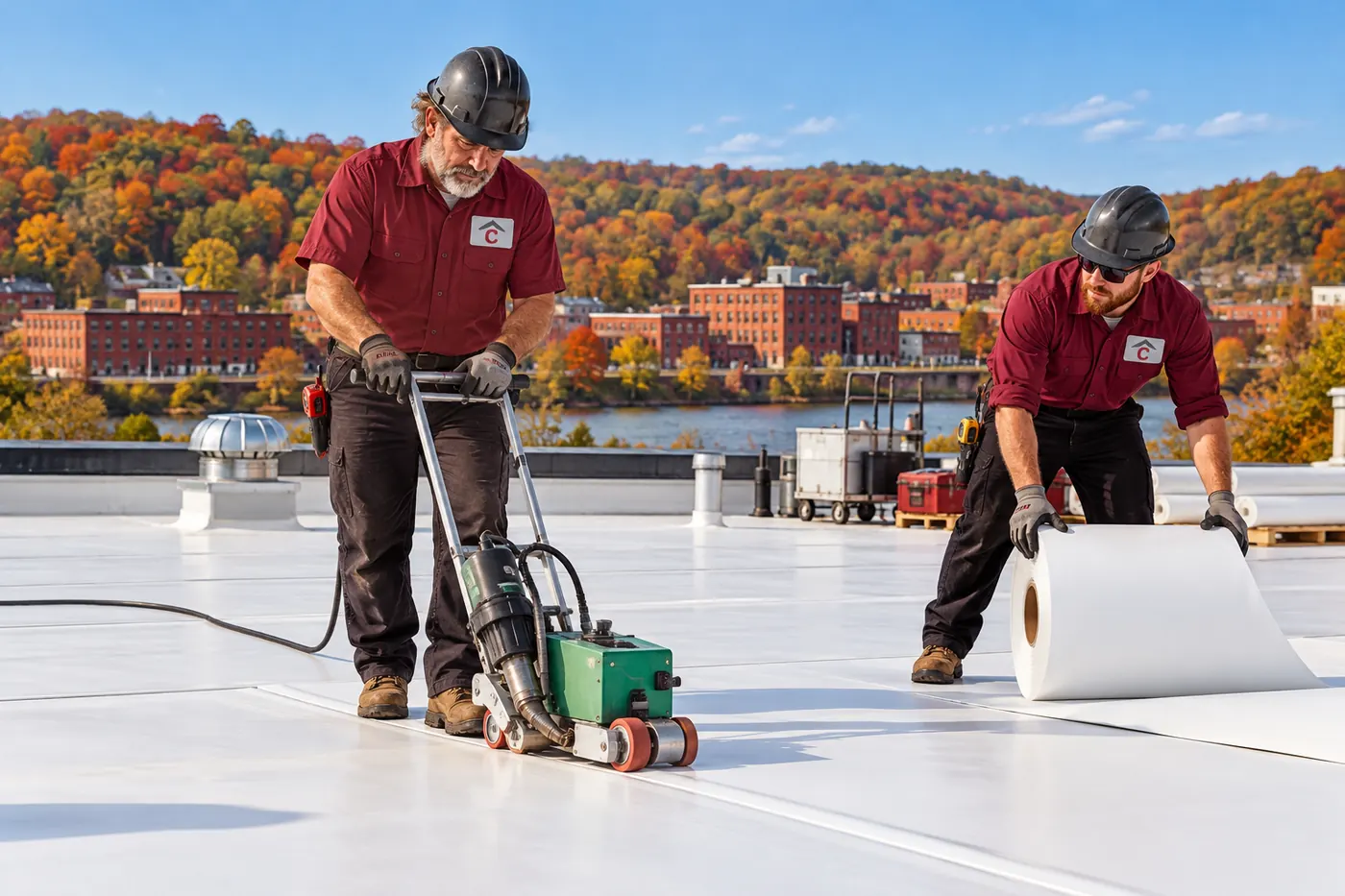
As a Covington commercial roofing contractor, we repair, recover, and replace TPO, EPDM, flat, industrial, and metal roofs, starting with a walk of your roof.
Every job we take as a Covington commercial roofing contractor starts with the condition of your roof. These four situations cover most of what building owners call about.
Water that shows up in two or three spots usually traces to a lap, a pipe boot, or a drain clamp we can fix.
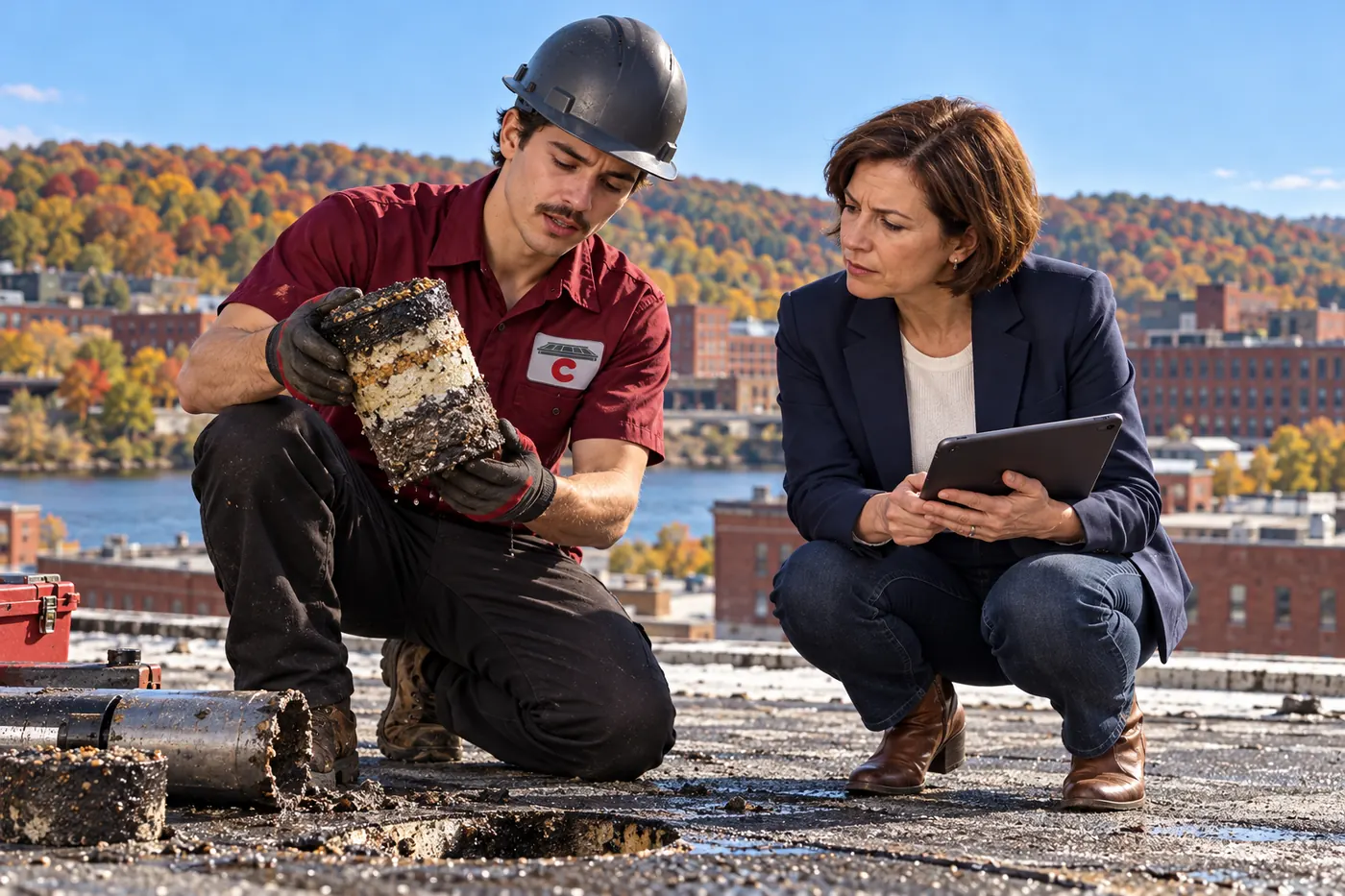
Soft spots mean wet insulation below the membrane, so a moisture scan decides between a recover and a tear-off.
Plant roofs need membranes rated for what comes out of the vents, plus curbs set high enough to flash.
Rust spread across several panel runs points past screw-by-screw repair to new panels on that roof area.
A roof that gets fixed or replaced on your schedule costs less disruption than one replaced after a winter of leaks.
Tapered insulation, crickets behind curbs, and reset drain bodies move water off a nearly flat deck before it ponds.
New insulation at the energy code level, and a white TPO sheet where cooled space sits below, cut heat gain and loss through the deck.
Abandoned curbs and dead vents come out and get decked over during a replacement, leaving fewer flashings to fail later.
Sections are torn off and closed the same afternoon, so tenants, stock, and production stay dry under the roof.
Invoices that split tear-off, deck repair, insulation, and membrane make tax and insurance questions easier for your accountant.
Pick the column that sounds like your roof. Each one links to the work that usually comes next.
Damage sits at a few points and the insulation under them is dry.
One existing roof is in place, it is dry, and the deck holds firm.
Wet insulation, two existing roofs, or a rusted deck rule out a recover.
Call us with the building address and where the water shows inside. A stopgap repair can keep the space dry while a full roof plan comes together.
These are the conditions that turn up most on Northern Kentucky commercial roofs, from riverfront warehouses to hilltop offices.
Older single-ply sheets pull tight over the years and lift the flashing off curbs and parapets, which opens a path for water at the base of the wall.
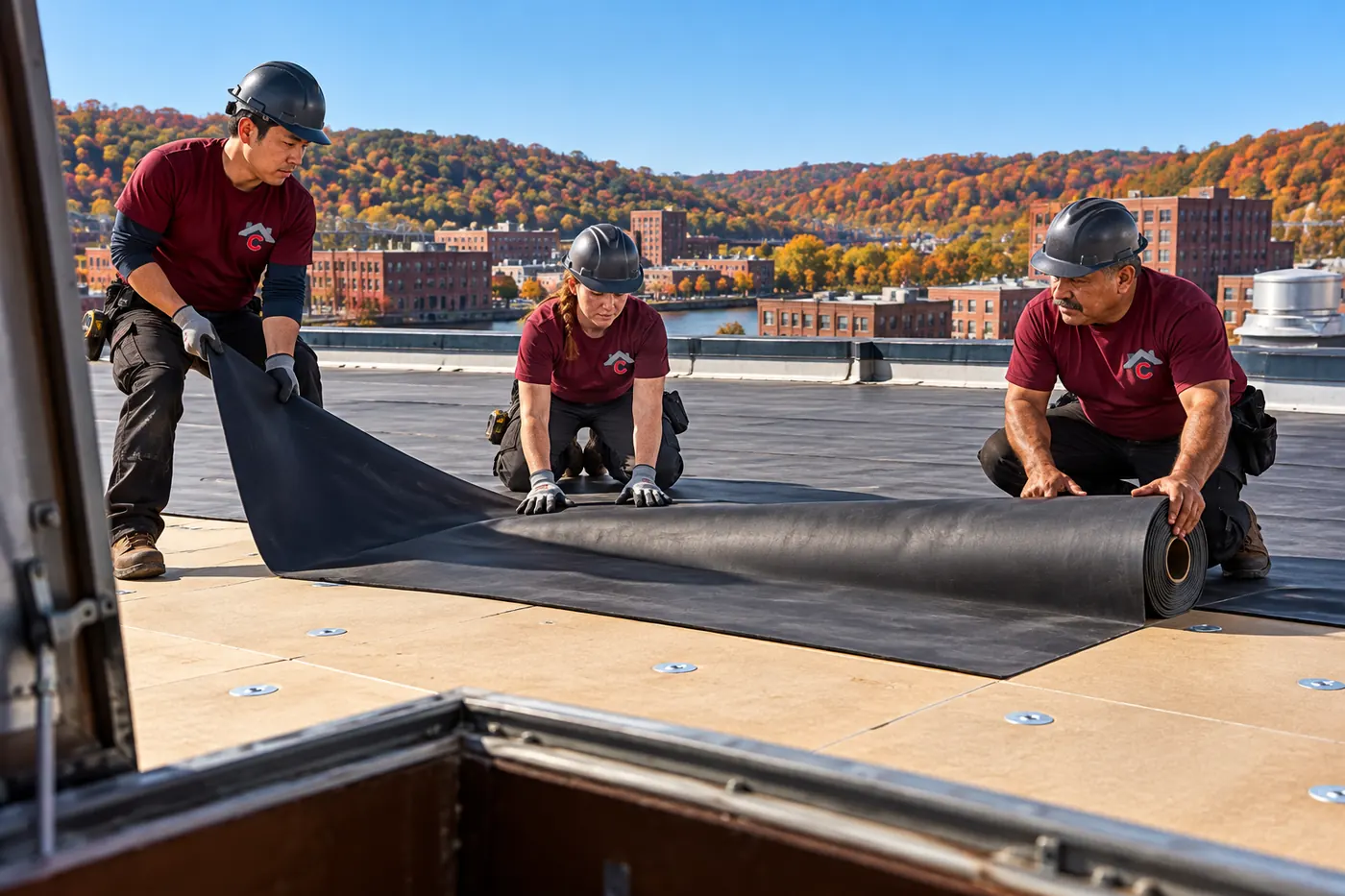
Seam tape that was laid over a poorly primed lap lets go in cold weather, and the edge of the lap starts curling back.
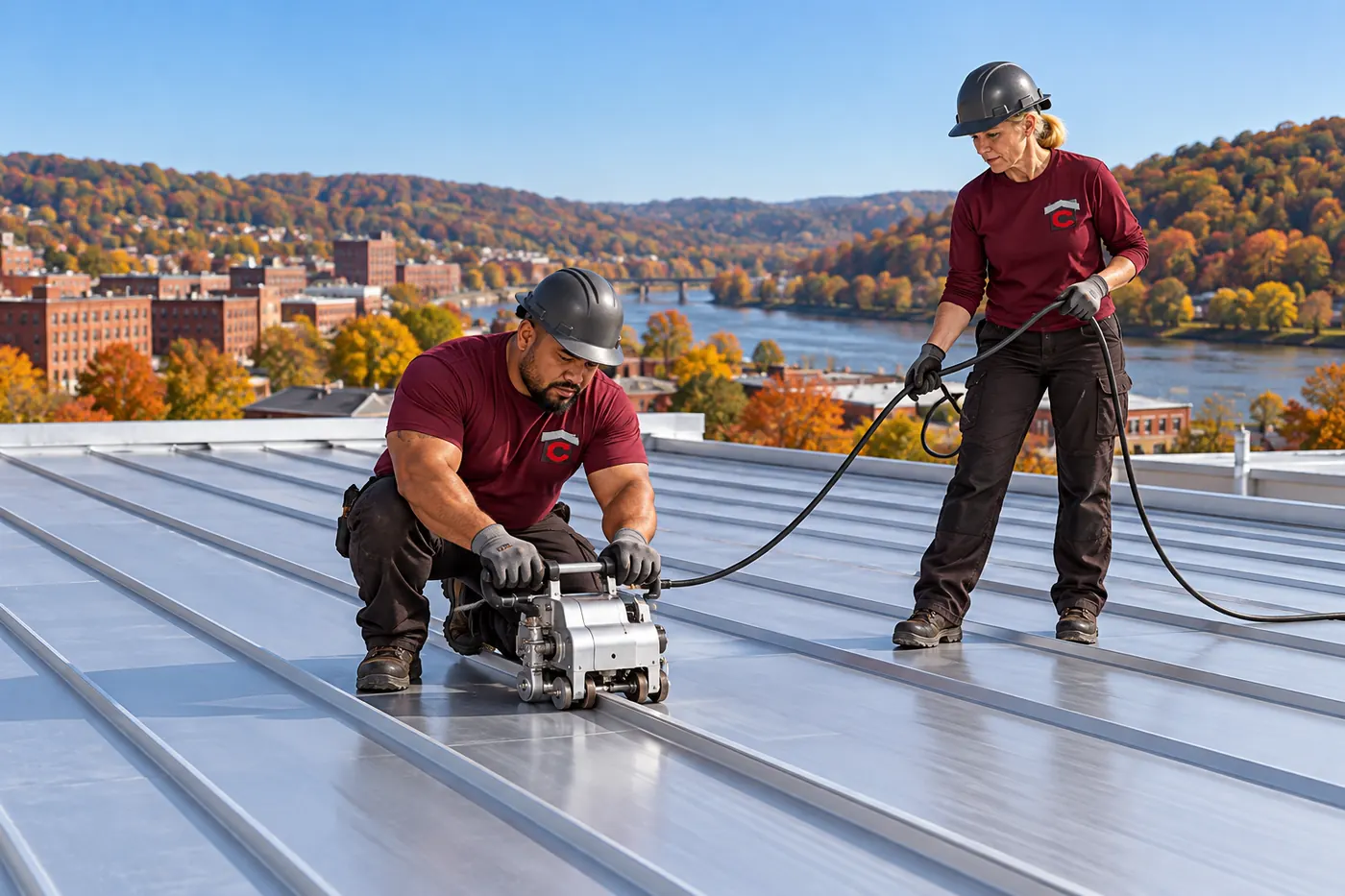
Washers dried out by sun and heat let water past each screw, and rust starts at the end laps and eaves of R-panel roofs.
Water that sits two days after rain points to a clogged strainer, a drain set too high, or a deck that has sagged between joists.
Storm wind gets under a lifted coping cap or gravel stop and peels the roof back from the perimeter first.
Leaks travel along the deck flutes before they drip, so a ceiling stain often sits several feet from the opening on the roof.
Each step below shows where it happens, so you know when crews are on the roof and when the work moves to the building or the paperwork.
We walk the field, edges, curbs, and drains, look at the deck from inside where it is open, and match each ceiling stain to the roof detail above it.
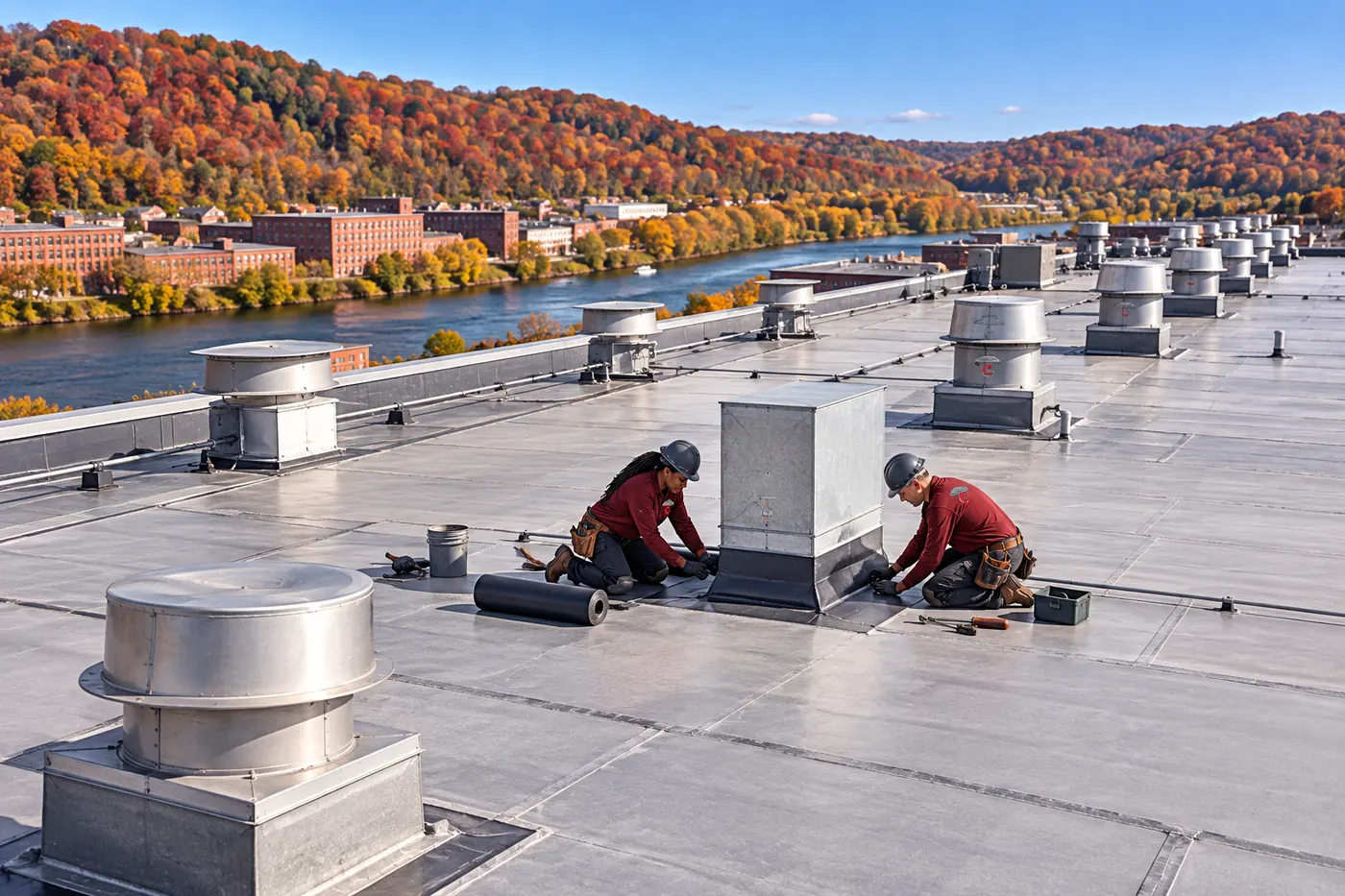
Roofs headed for a recover or replacement get an infrared scan or core cuts, which show how much insulation is dry enough to stay.
You get photos tied to each finding and a plain write-up comparing repair, recover, and tear-off for that roof, with the membrane or panel picked to fit.
Covington jobs start with the city zoning permit before PDS of Kenton County; crane pads, dumpsters, and fire lanes get agreed with you.
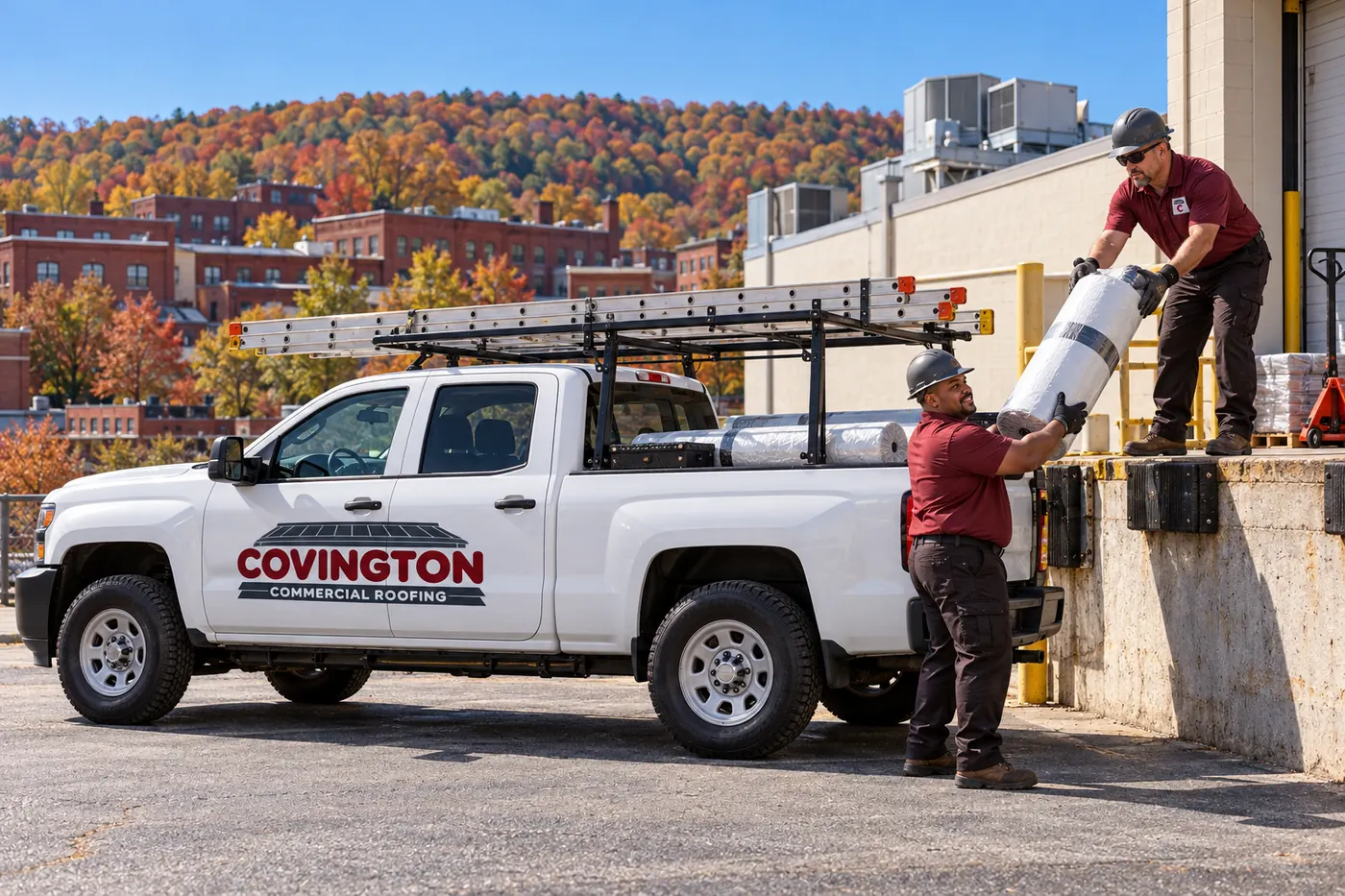
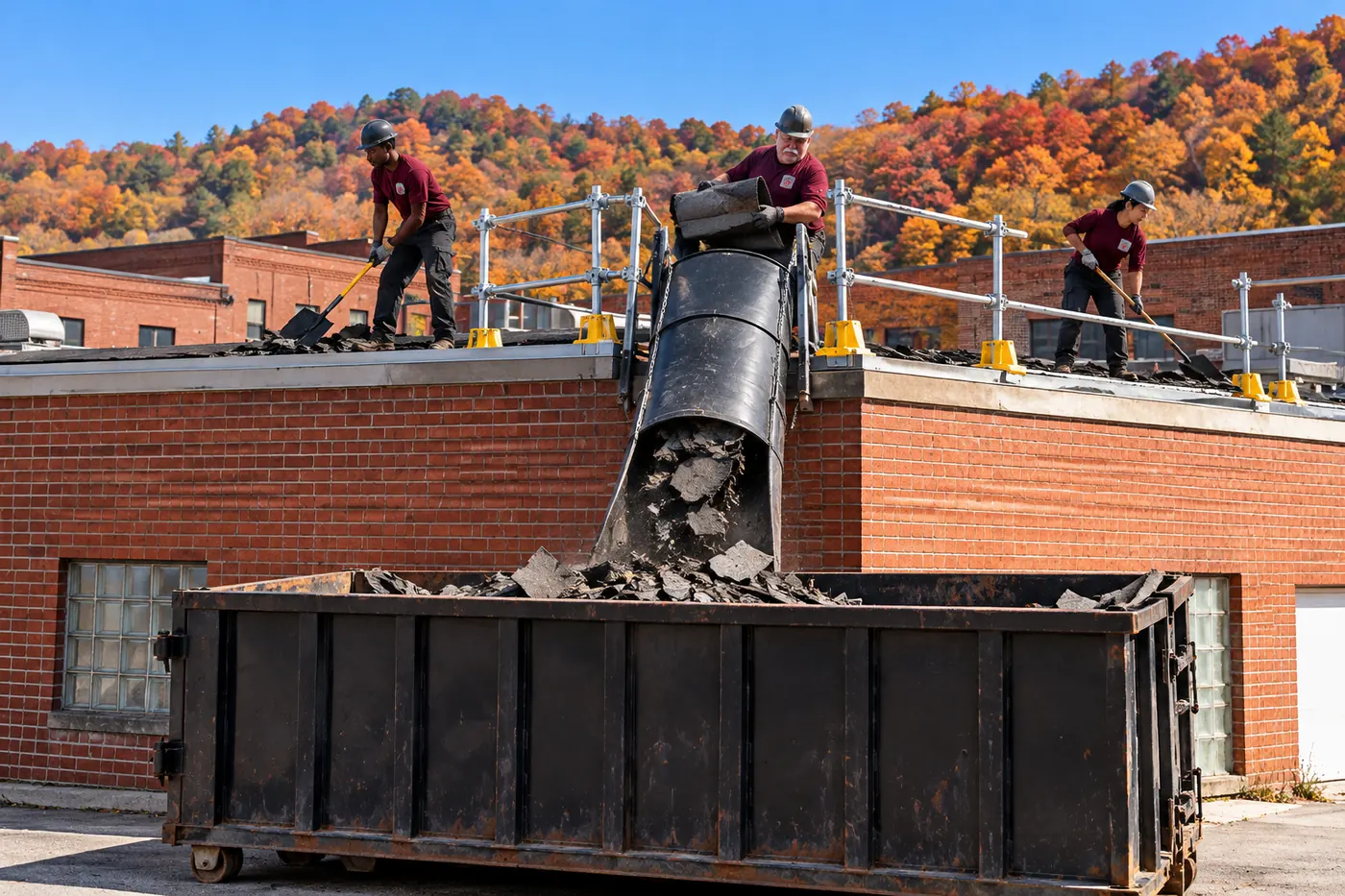
Crews remove only what they can dry in by evening, replace soft deck panels, and seal every section with a tie-in before leaving.
Curbs, walls, and drains get their flashing last, seams are probed, and magnets sweep the ground for fasteners at the end of each day.
We install, repair, and replace commercial roofs in Covington and the 14 towns below, on both banks of the Licking River.
Building somewhere else in Northern Kentucky? Call us or send us a message.
Shops and retail along the Latonia streets inside Covington, permitted through the city and PDS.
Latonia Commercial Roofing →Hillside commercial lots by I-71/75, where crane pads and dumpster spots get planned first.
Fort Wright Commercial Roofing →Low industrial and commercial lots along the Licking River, staged on higher paved ground.
Wilder Commercial Roofing →Dixie Highway shops under wooded hillsides that fill gutters and drain strainers with leaves.
Park Hills Commercial Roofing →Larger retail and office roofs uphill from the Newport riverfront, with overflow scuppers checked.
Southgate Commercial Roofing →Office, retail, and institutional roofs crowded with rooftop units and service paths.
Highland Heights Commercial Roofing →Historic district buildings where visible roof work goes through a Certificate of Appropriateness.
Newport Commercial Roofing →Riverside commercial buildings west of Covington, with parapets and coping facing river wind.
Ludlow Commercial Roofing →Retail and office roofs along the US 27 corridor, with the permit office confirmed early.
Cold Spring Commercial Roofing →Hilltop commercial buildings where roof corners and edges take the most wind.
Fort Thomas Commercial Roofing →Attached storefront buildings where the new roof meets the neighbor at a party wall.
Bellevue Commercial Roofing →Warehouses and shops on low Ohio River lots, built and permitted to Kentucky code.
Dayton Commercial Roofing →Straight-line distances from central Covington, rounded.
Any roof over a building used for business, industry, storage, worship, or farming counts. Around Covington that covers riverfront warehouses, storefront blocks behind parapet walls, churches, schools, plants, and farm buildings.
Most fall into two families: low-slope membrane roofs that drain to interior drains or scuppers, and metal panel roofs that shed water to an eave gutter.
Roof area sets the starting point, but the tear-off, deck repairs, insulation, and detail work usually move the total more than the membrane does. Two roofs of the same size can land far apart when one has wet insulation or a dozen curbs.
A free inspection gives you a written scope with each of those items called out.
Adhesives, primers, and heat welding each carry temperature and moisture limits from the manufacturer. Covington gets hot, humid summers, freezing winter nights, and frequent spring rain, so crews size each day’s tear-off to the forecast.
Severe weather warnings for Kenton County come from the National Weather Service office in Wilmington, Ohio, and those forecasts decide how much roof gets opened each morning.
Yes. Inspectors reach the roof by your hatch, a ladder, or a lift, and only step inside to look at the deck underside where ceilings are open. Staff below hear foot traffic for an hour or two.
Tell us about locked hatches, alarm panels, or a tenant who needs notice, and the visit gets planned around them.
Standing seam and R-panel metal roofs, older built-up and modified bitumen roofs, and buildings that carry two systems at once are all part of the work.
A common Covington pairing is a metal main roof with a membrane-covered addition, and the tie-in where they meet gets its own flashing plan.
Send the address and what you see on the roof, and we will set a time to walk it.