Silt
Silt in Leaders
Leaders and storm lines fill with silt after the river rises.

We work as a Wilder commercial roofing contractor on commercial and industrial buildings near the Licking River, planning staging and drainage around possible high water.
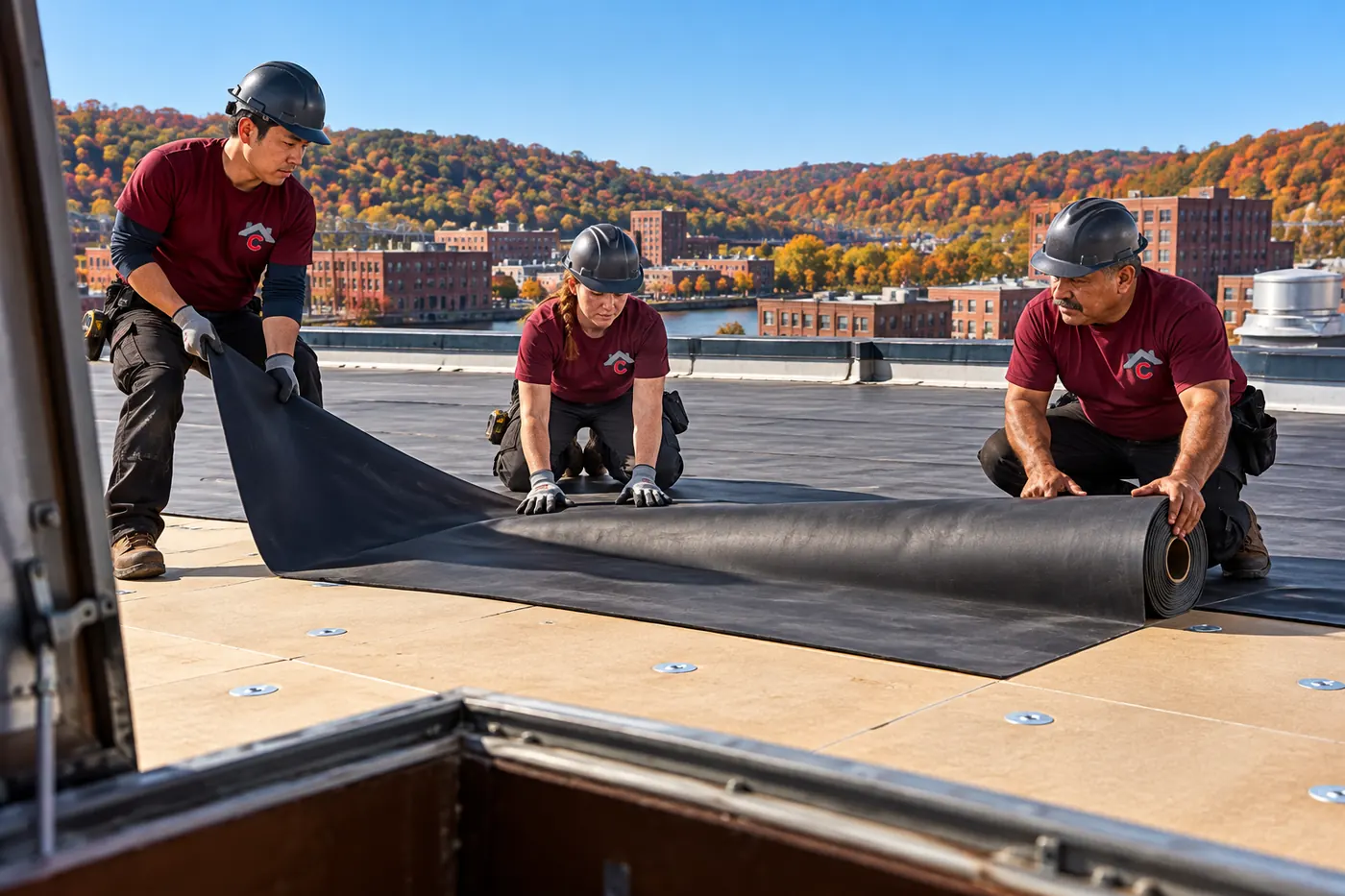
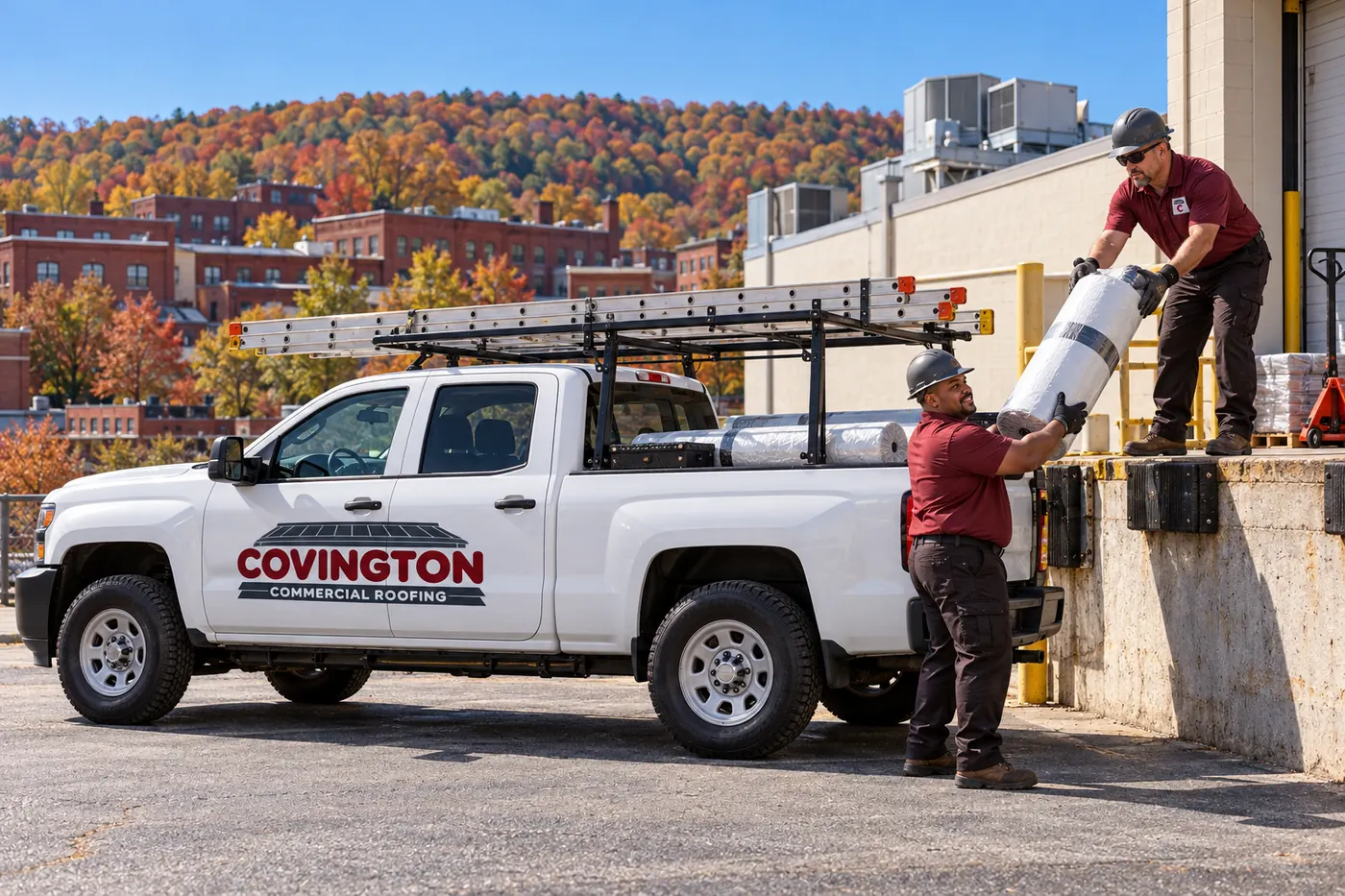
A Wilder commercial roofing contractor plans every job around the Licking River. Low commercial and industrial lots near the water need staging and drainage set up for possible high water.
Campbell County’s building inspection office reviews commercial roof permits in Wilder. The state sheet lists a second county contact only for single-family work.
Buildings near the Licking River show these after high water.
Leaders and storm lines fill with silt after the river rises.
Low walls where water stood show soft or rusted trim at the roof line.
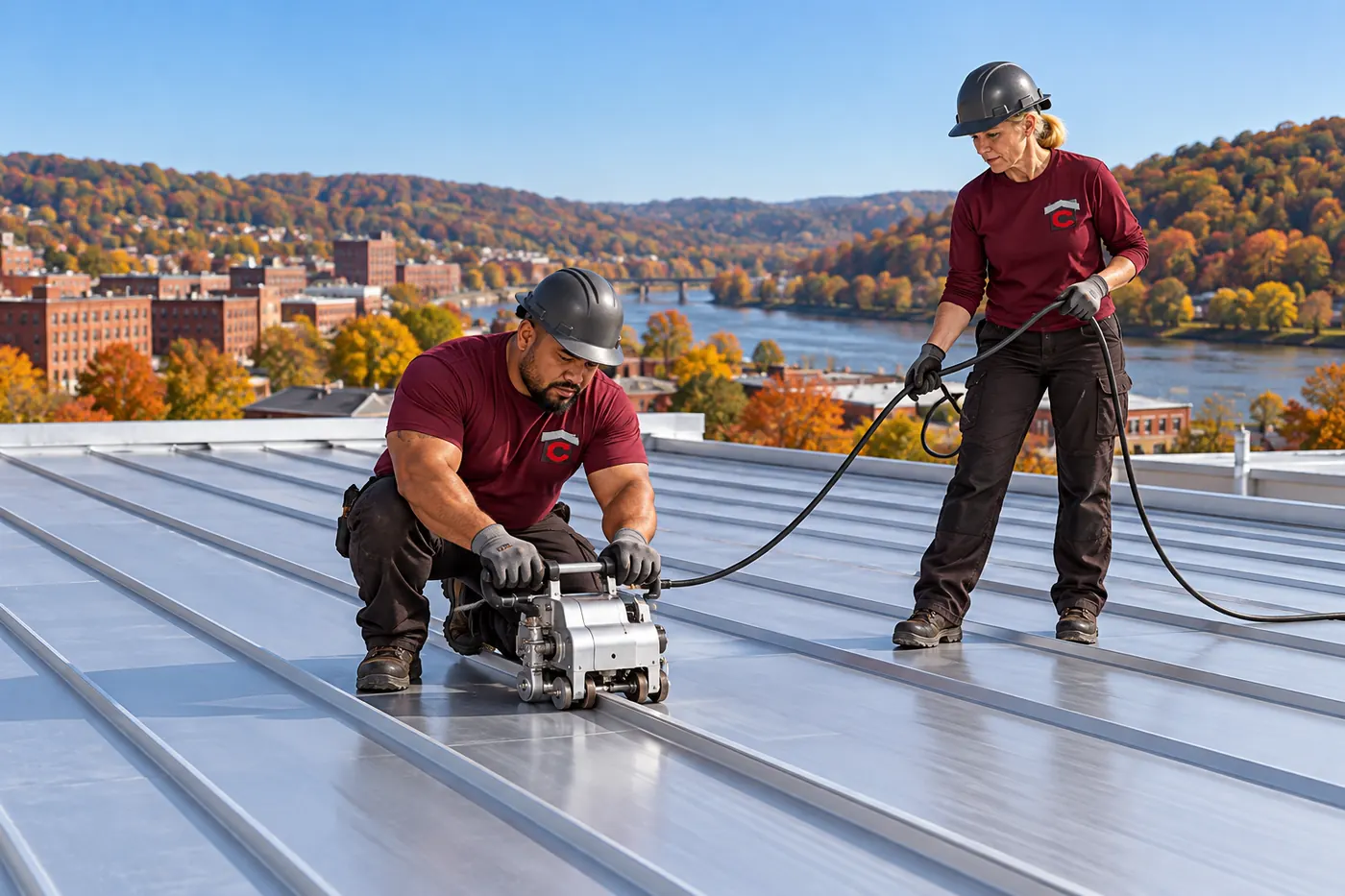
Industrial buildings carry long metal runs with rusted laps at the eaves.
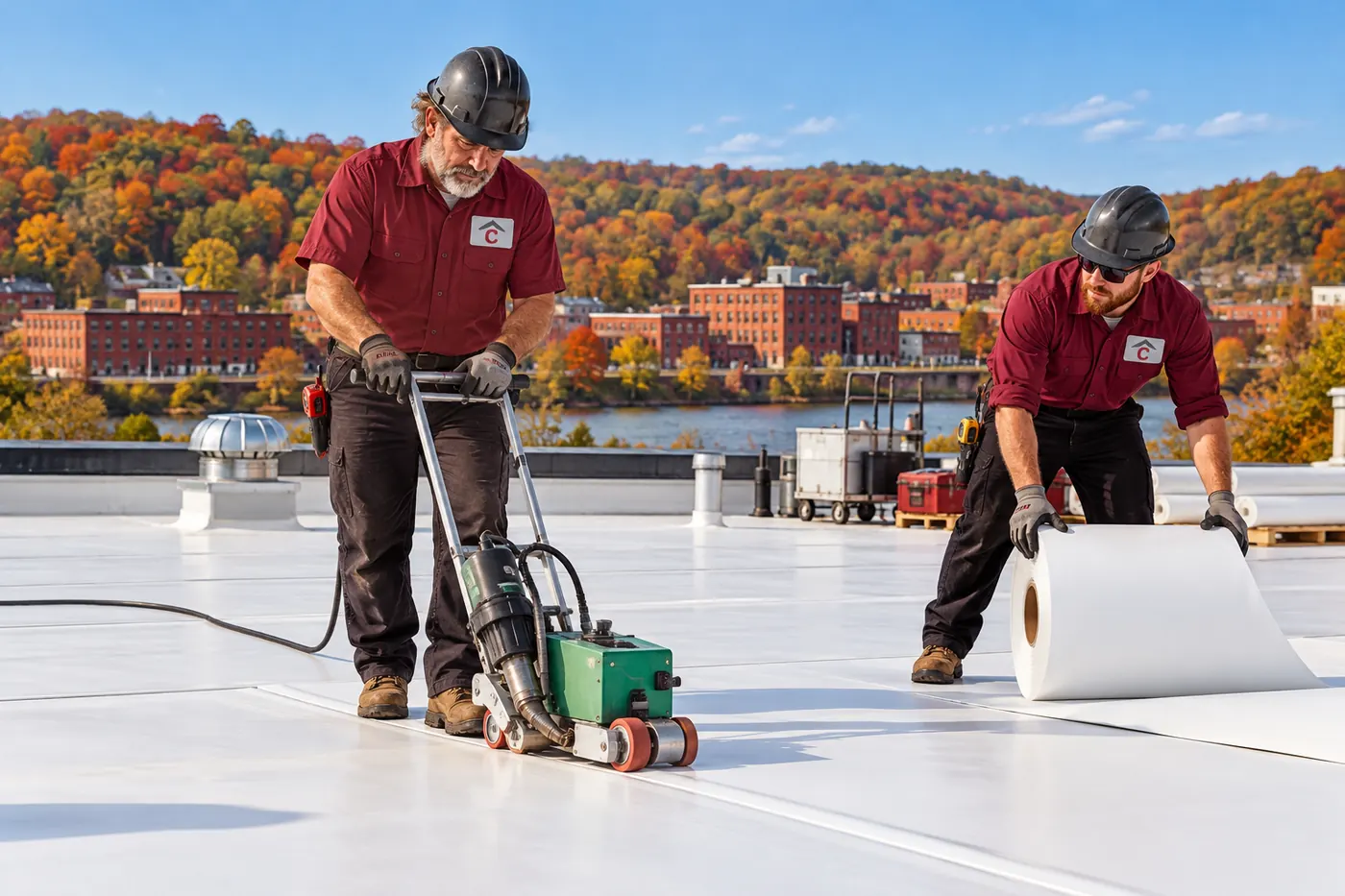
Flat office wings show open laps and shrunk flashing.
Eave gutters on low industrial buildings collect silt and debris left behind when the river drops.
Steel curbs on plant roofs rust at the base where water pools after storms.
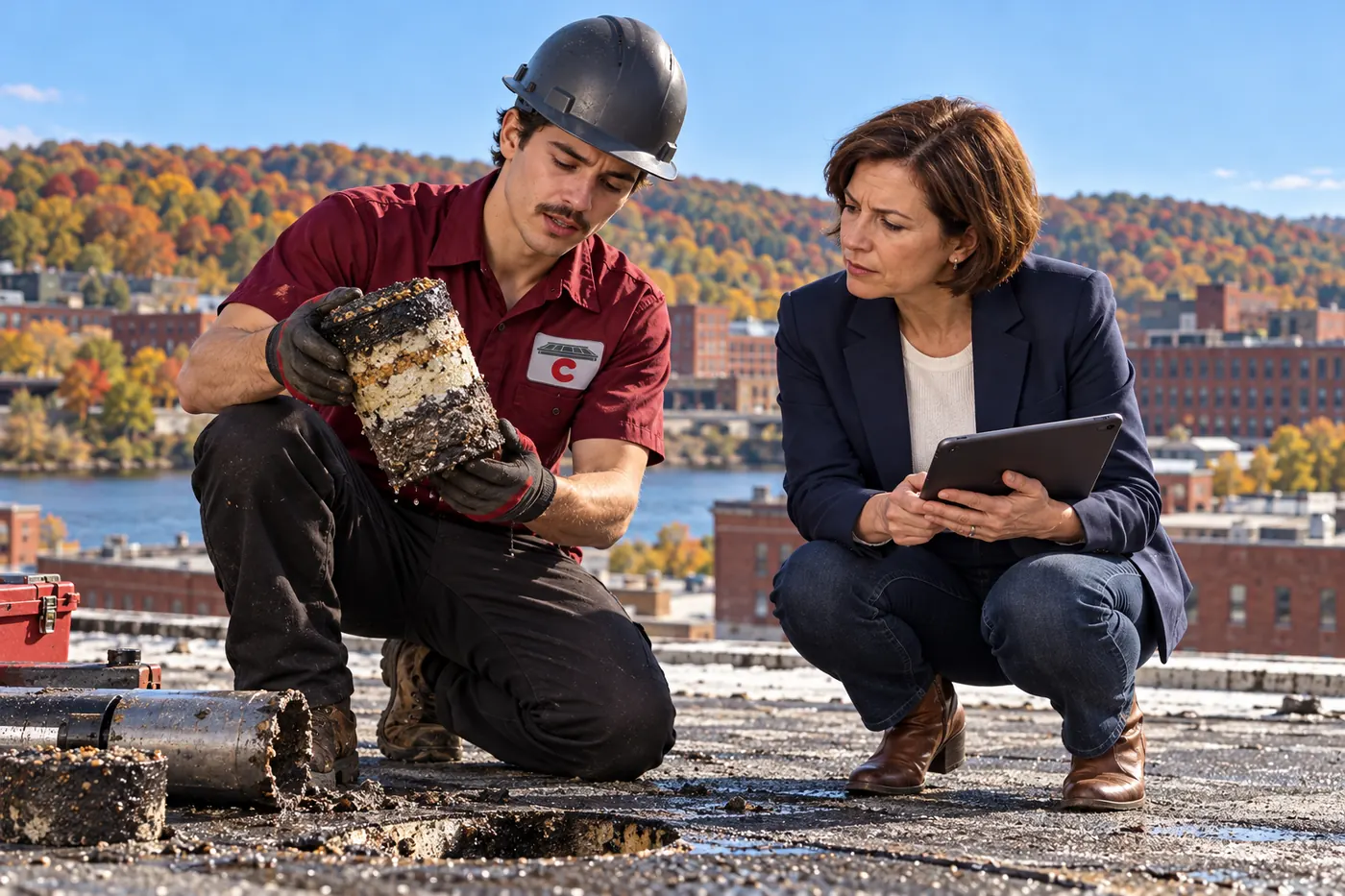
A Wilder roof replaced with the river in mind recovers faster after high water.
Silt-free leaders keep the new drains working after the water drops. Water leaves the roof before silt has a chance to settle.
New flashing and trim replace pieces damaged where water stood. Low walls stop wicking water into the building.
Cranes and materials stay on higher, paved ground. Material stays dry and in place if the river comes up.
Tear-off weeks follow river forecasts as well as rain. Open sections close well before a rising river reaches the lot.
Wilder buildings mostly need one of these.
Sectioned work over plants and warehouses that stay running. Each bay closes before the plant’s next shift starts.
Industrial Roofing →New panels for long industrial metal roofs. Rusted laps get replaced panel by panel along the eave.
Metal Roofing →Rubber membrane for flat office sections. Wings tie into the main roof at flashed joints.
EPDM Roofing →Flashing and drain fixes after high water. Repairs focus on walls and drains where water stood.
Roof Repair →Call us. Silt in leaders is the usual cause, and it gets checked first.
River timing sits at the front of the plan.
We walk the roof, run water through drains, and check low walls for water damage. Drain tests show which leaders need clearing.
Silt comes out of leaders and storm lines before tie-ins. Silt removal gets photographed before tie-ins.
Campbell County building inspection reviews the commercial permit. The county reviews the scope like any commercial roof.
Materials sit on higher ground while crews watch river forecasts. Staging plans name the high ground for each phase.
New roof, drain bodies, and wall flashing go in section by section. Drain bodies get checked again after the first storm.
Beyond Wilder, we take commercial roofing work in Covington and these towns.
Elsewhere near Wilder? Call us or send us a message.
Covington neighborhood shops and retail roofs.
Latonia Commercial Roofing →Hillside lots beside I-71/75.
Fort Wright Commercial Roofing →Dixie Highway shops under wooded slopes.
Park Hills Commercial Roofing →Large retail and office roofs uphill.
Southgate Commercial Roofing →Equipment-heavy office and institutional roofs.
Highland Heights Commercial Roofing →Historic district roofs and riverfront blocks.
Newport Commercial Roofing →Riverside buildings west of Covington.
Ludlow Commercial Roofing →Retail roofs on the US 27 corridor.
Cold Spring Commercial Roofing →Hilltop buildings in steady wind.
Fort Thomas Commercial Roofing →Attached storefronts with party walls.
Bellevue Commercial Roofing →Low Ohio River lots, Kentucky code.
Dayton Commercial Roofing →Low lots near the river plan staging and drainage around possible high water: cranes and materials on higher paved ground, drains and leaders checked for silt, wall flashing on low walls inspected, and river forecasts watched during tear-off weeks. Higher ground for staging gets picked on the first visit.
Leaders and storm lines get flushed until water runs clear, then strainers and drain bodies are checked before the new roof ties in. Photos of the cleared leaders go with the job records.
Industrial roofs get replaced bay by bay over running operations, with staging kept off the low parts of the lot near the river. Long metal runs get replaced panel by panel along the eave.
Campbell County’s building inspection office reviews commercial roof permits in Wilder. Permits follow the same county path as nearby towns.
Work pauses for any section where access or staging sits in the path of high water, and every open section is closed before the forecast turns. Materials on the roof stay limited to what gets installed next.
Only the material crews will install in the next day or two goes on the roof. The rest stays on higher paved ground, away from the low parts of the lot that see water first when the Licking River rises.
The drains themselves match any other Campbell County roof. What changes is the upkeep: leaders and storm lines get flushed after high water, and strainers get checked before the next heavy rain.
Base trim, wall-to-roof flashing, and sealant on low walls where water stood get checked for soft or rusted spots. Damaged pieces are replaced so the next rain stays outside the wall.
Send the address, and we will walk the roof and the lot.