If Your Roof
Leaks at One Curb After Every Hard Rain
Curb flashing that has pulled loose from the membrane gets re-flashed and sealed in one visit.
Start WithCurb Flashing Repair

We work as a Covington commercial roof repair contractor on membrane and metal roofs, tracing each leak to the seam, curb, drain, or fastener that let it in.

A Covington commercial roof repair contractor fixes points on a roof. These four cases show where a repair holds and where replacement takes over.
Curb flashing that has pulled loose from the membrane gets re-flashed and sealed in one visit.
A cracked clamping ring or loose membrane at the drain lets water run straight into the leader pipe opening.
Screws get swapped for the next size up with fresh washers, and open end laps get new butyl tape.
Wet insulation over much of the deck ends the repair conversation, and replacement planning starts with a moisture scan.
These are the failure points we find most when a leak call comes in from a Northern Kentucky building.

Heat-welded TPO laps with cold spots and taped EPDM laps with lifted edges both let water slip under the sheet.
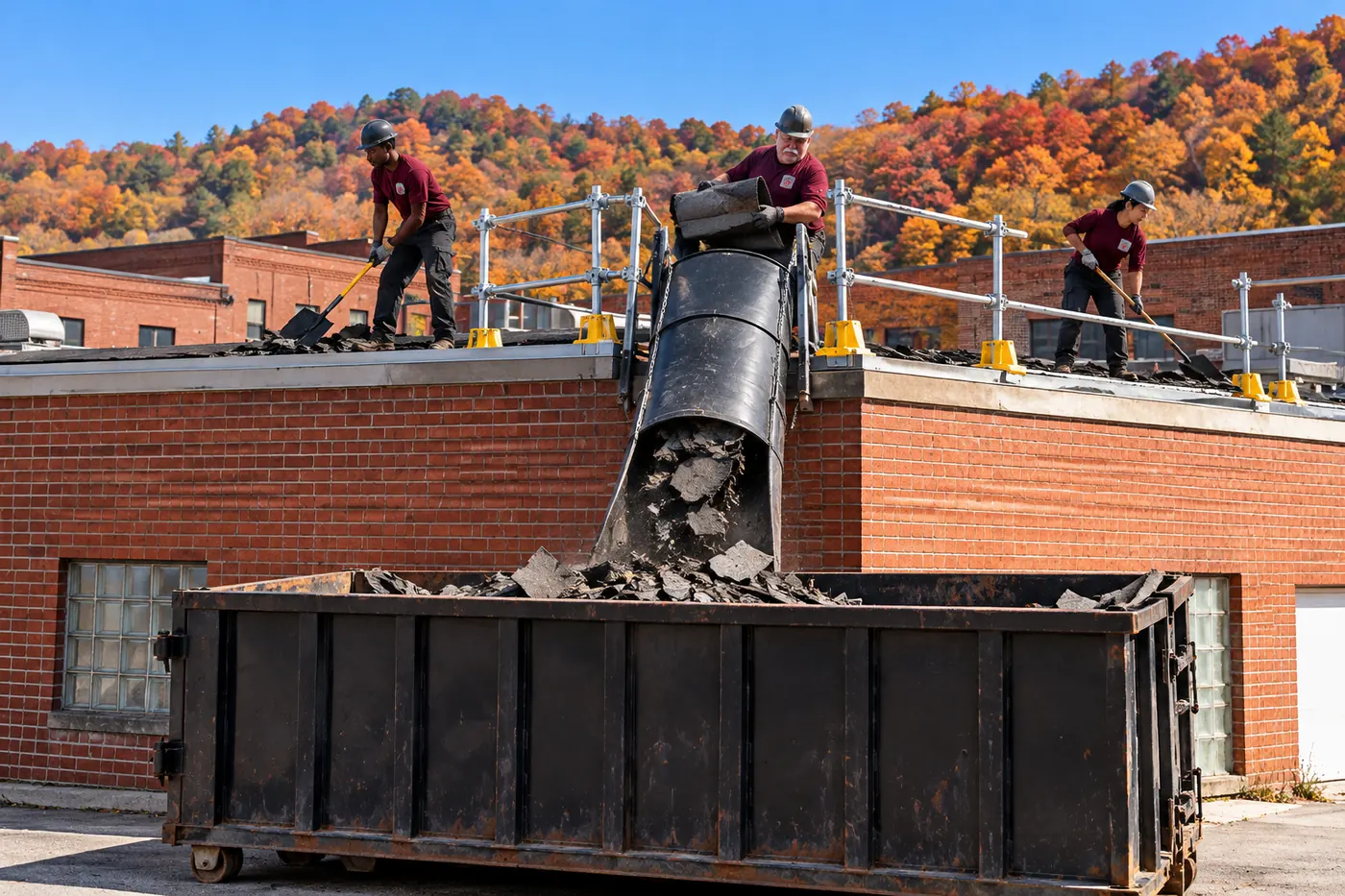
Shrinking membrane tugs the flashing off parapets and curbs, opening a gap right where water runs down the wall.
Rubber boots split at the collar after years of sun, and the gap faces straight up into every rain.

Water held between overlapping panels rusts the steel from the inside out, starting at the eave.
Repairs are matched to the roof already on the building, using the same membrane or panel profile.
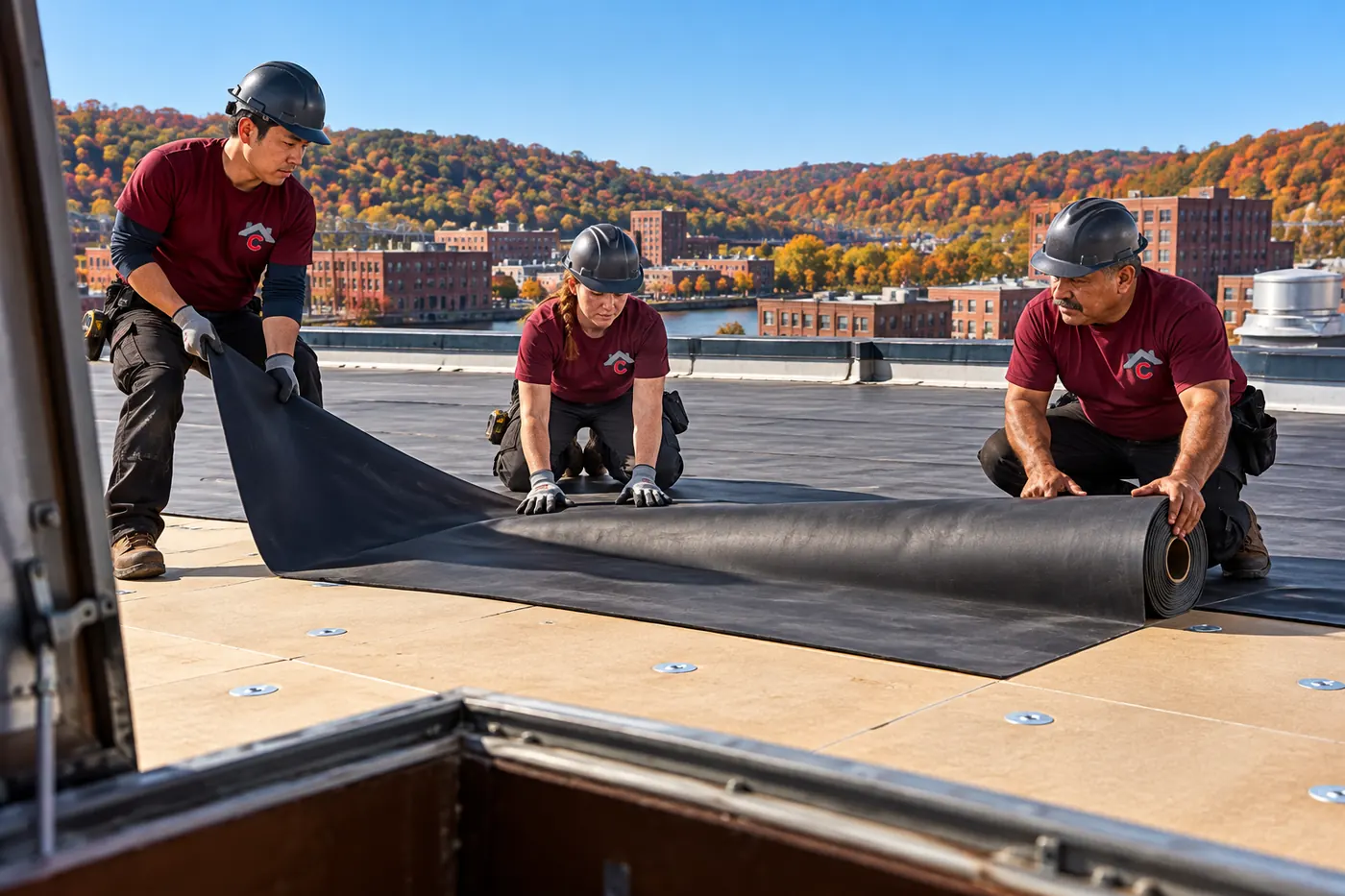
Primed and taped EPDM patches or hot-air welded TPO patches cover punctures, open laps, and blisters cut out of the field sheet.
EPDM Roofing →Oversized screws with new washers, cleaned and re-taped side laps, and stitch screws close the joints where metal roofs leak first.
Metal Roofing →Loose coping caps get refastened with sealed joints, and drains get new clamping rings, strainers, or retrofit inserts.
Flat Roofing →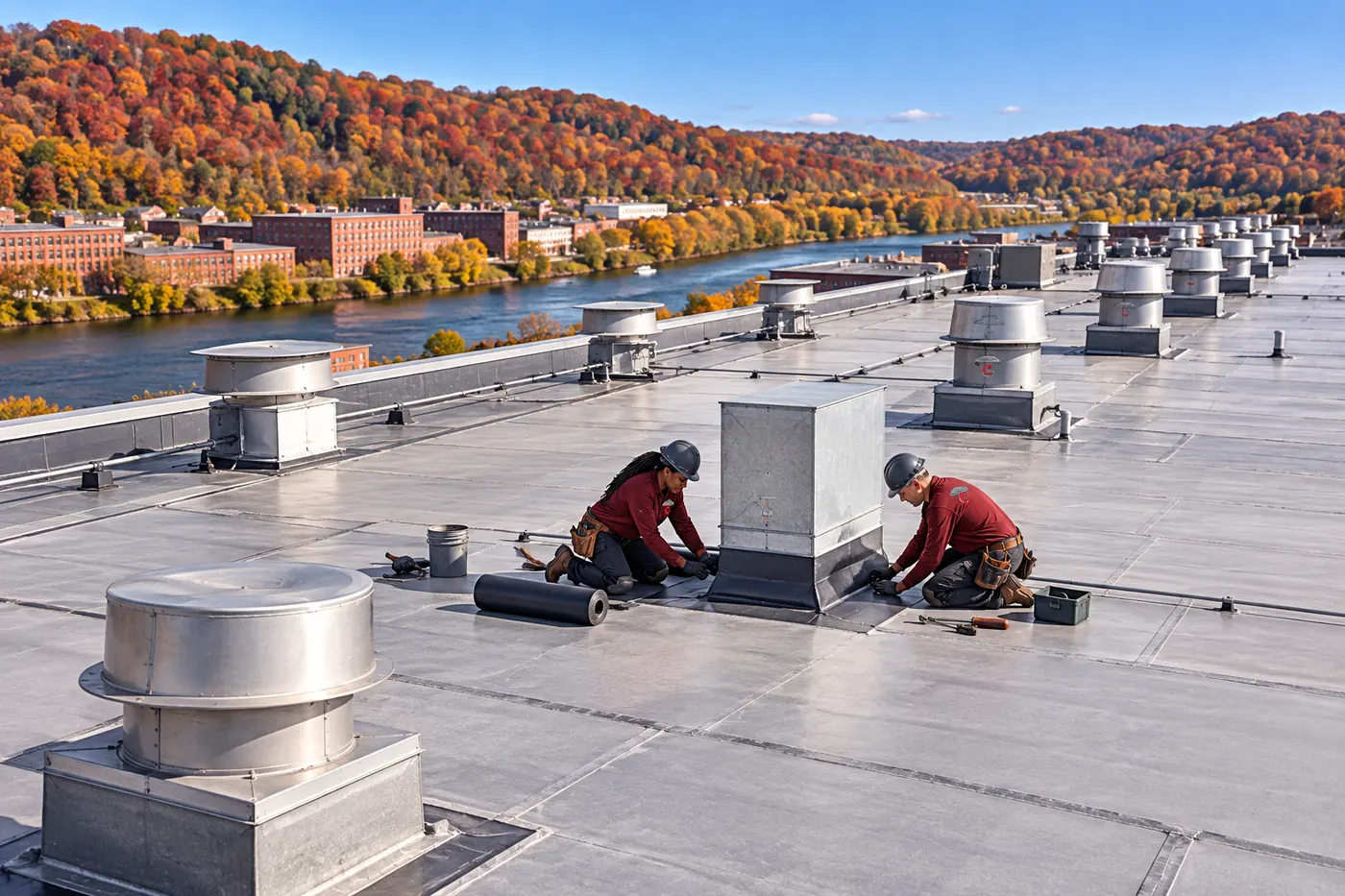
A good repair buys time and keeps water off the insulation while a bigger plan comes together.
Stopping a leak at the curb or lap keeps water from spreading through the insulation and turning a point repair into a tear-off.
Patching the worst spots now lets you budget a full roof for a later season instead of an emergency in January.
Ceiling tiles, stock, and equipment under the leak stop taking water once the opening on the roof is sealed.
Dated photos of each repair build the history an owner needs when deciding on replacement later.
Call us with the address and where water shows inside. We trace the source on the roof before anything gets patched.
Repair visits follow the same order every time, so nothing gets sealed over a wet spot.
We start inside at the stain, then walk the roof above it, checking laps, curbs, pipe boots, and drains uphill of the drip.
Water runs along deck flutes before dripping, so the opening is often several feet from the stain and gets confirmed before work starts.
Saturated insulation under a repair area is cut out and replaced so the patch goes down over a dry, firm base.
Matching membrane, flashing, sealant, or panel parts go on following the maker’s steps for that roof type.
Welds are probed, taped seams rolled again, and every repair photographed so you have a dated record.
Repairs that reveal a worn-out roof lead to one of these.
White welded membrane for cooled offices, retail, and warehouses once repairs stop holding.
See TPO Roofing →Recover or tear-off decisions for low-slope roofs with ponding or wet insulation.
See Flat Roofing →Sectioned replacement over plants that keep running during the work.
See Industrial Roofing →Water enters at a seam, curb, or boot and then runs along the steel deck flutes before it drips. We start at the stain, follow the flute direction uphill on the roof, and check every lap and penetration in that line until the opening turns up. A wet insulation core nearby confirms it.
Count the problem spots and check the insulation. Three or four leaks at curbs and laps over dry insulation are repair work. Seams opening across many laps, membrane pulling off every wall, or wet insulation over large areas mean the roof as a system is worn out, and patching becomes money spent twice.
Metal roof leaks get fixed at the part that failed: a screw with a dried washer, an open end lap, or loose flashing at a curb or wall. New screws go one size up, laps get cleaned and re-taped with butyl, and curbs get a diverter on the uphill side when it is missing.
Either a leak or condensation. Warm, moist air rising into a cold roof deck can drip in winter even when the membrane is intact. A roof walk after a dry stretch tells the two apart: open laps and wet insulation point to a leak, while dry insulation with frost on the deck underside points to ventilation.
Most repairs can. Primers, seam tapes, and adhesives list minimum temperatures, so cold-day work happens midday on dry surfaces, and some products switch to cold-weather versions. Metal fastener and lap repairs are less sensitive to temperature than membrane seams.
Tell us where the water shows inside, and we will find where it gets in.