Party Walls
Open Flashing at the Shared Wall
Flashing pulled loose where two roofs meet lets water into both buildings.
We work as a Bellevue commercial roofing contractor on attached storefronts and small commercial buildings, flashing the walls they share with their neighbors.
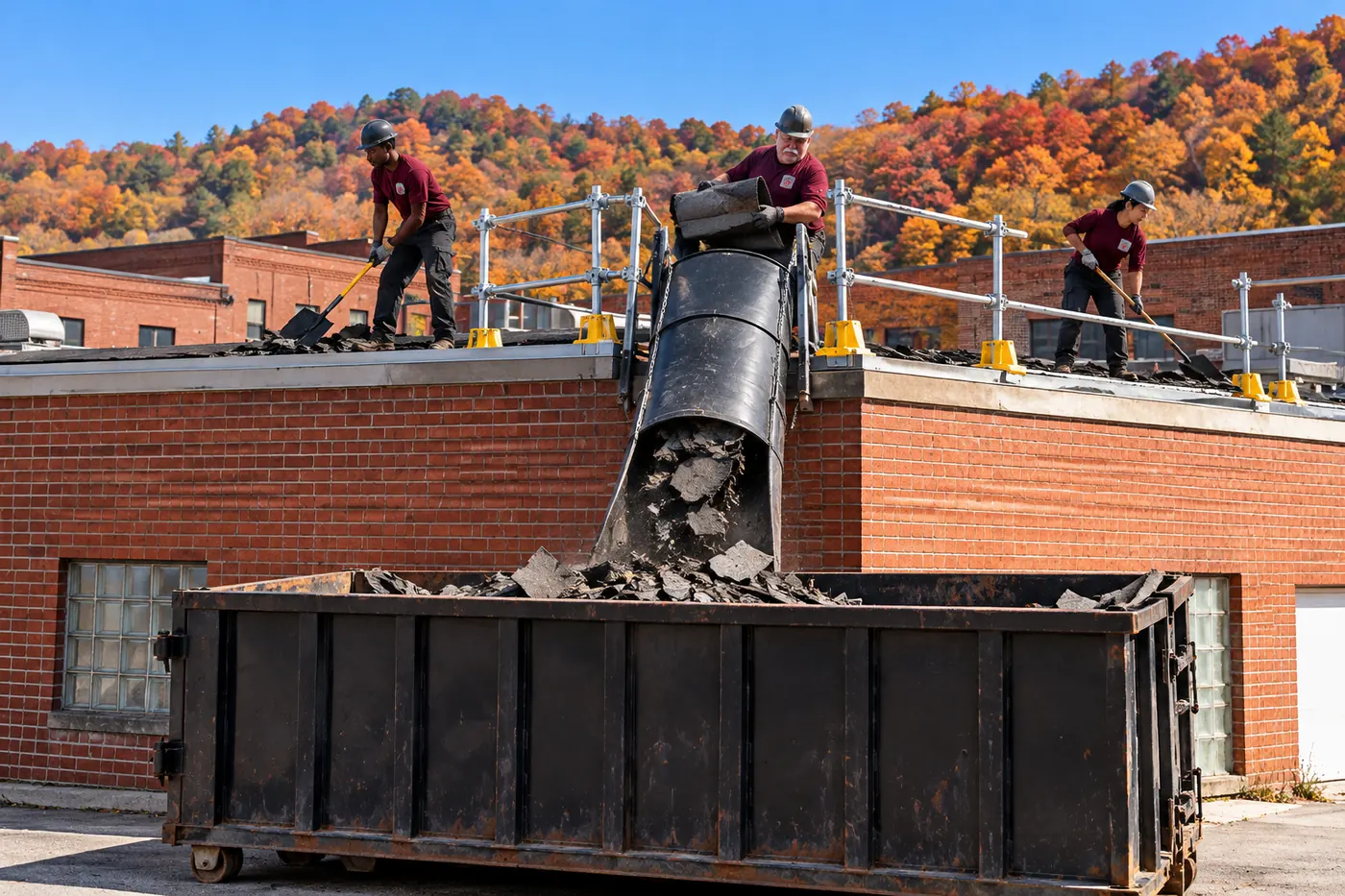
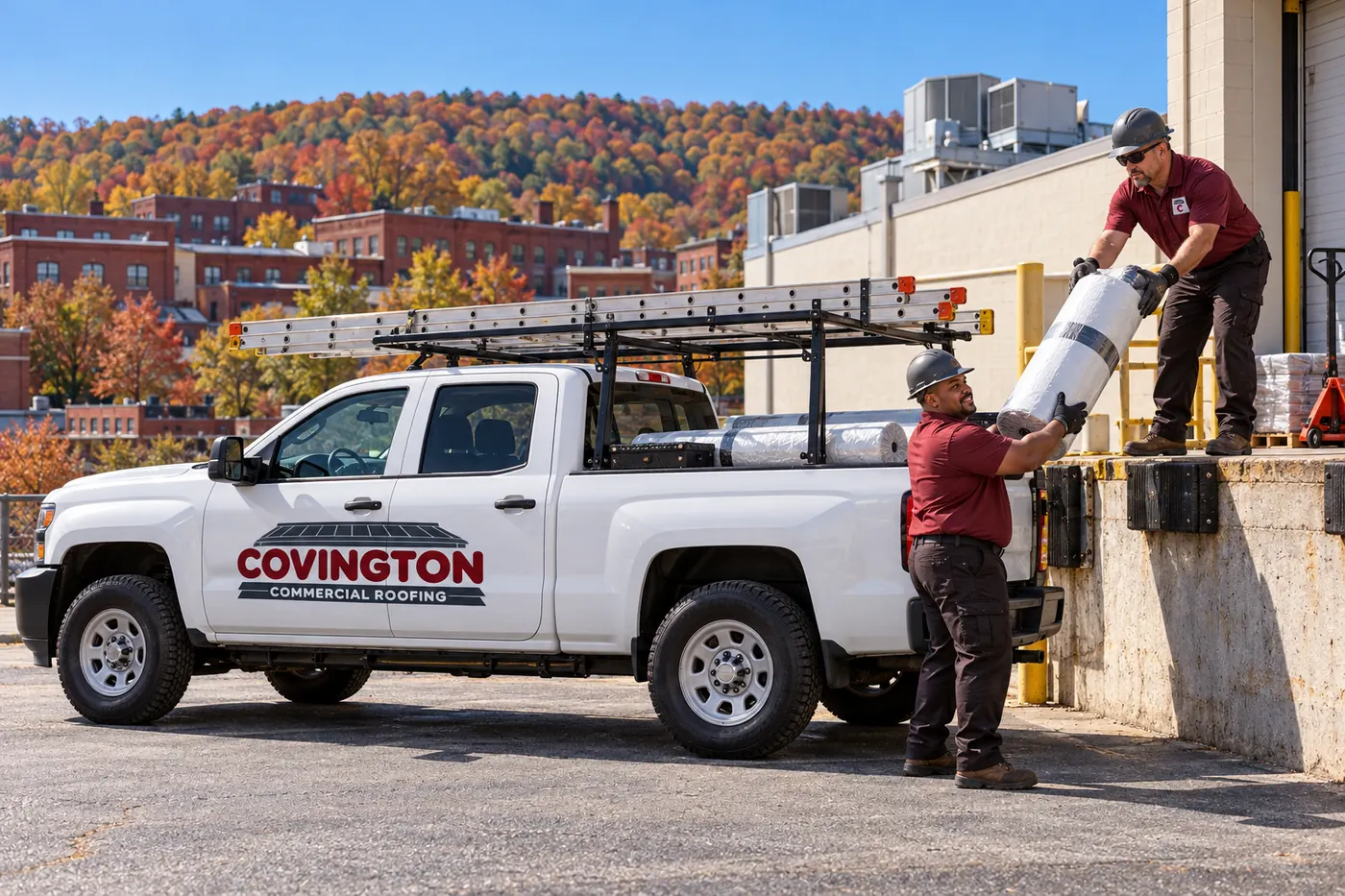
A Bellevue commercial roofing contractor spends much of each job at the party wall. Many commercial buildings in town are attached, so the replacement plan covers the wall shared with the neighbor as well as the field of the roof.
Flashing work at a party wall often touches both roofs, so talking with the neighboring owner before tear-off saves trouble. Campbell County’s building inspection office handles the commercial permit.
Attached commercial blocks share a few repeat trouble spots.
Flashing pulled loose where two roofs meet lets water into both buildings.
Where one roof sits higher, counterflashing into the taller wall cracks and lifts.
A neighbor’s scupper that spills onto the seam between roofs keeps it wet.
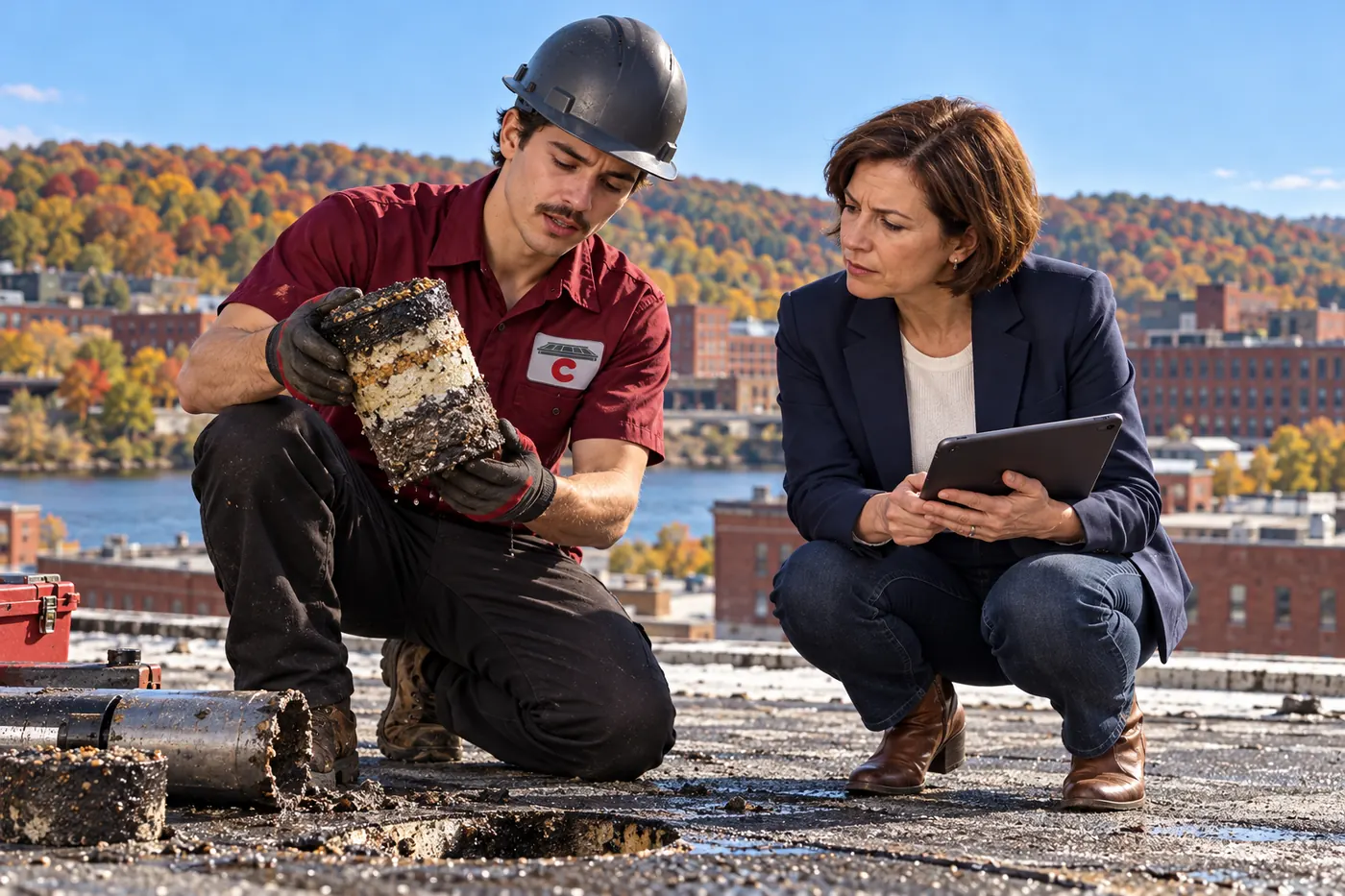
Small rear additions carry layers of patches that hide wet insulation below.
Plumbing vents on narrow shops have rubber boots that split and drip into back rooms.
These are the gains when an attached Bellevue roof gets replaced with the wall in mind.
New flashing and coping on the shared wall stop the leak that both owners have been chasing.
Drains and scuppers are set so neither roof empties onto the seam between them.
Access and flashing plans agreed up front keep the project moving once tear-off starts.
Tear-off removes stacked patches and shows the deck under rear additions.
These systems cover most attached Bellevue buildings.
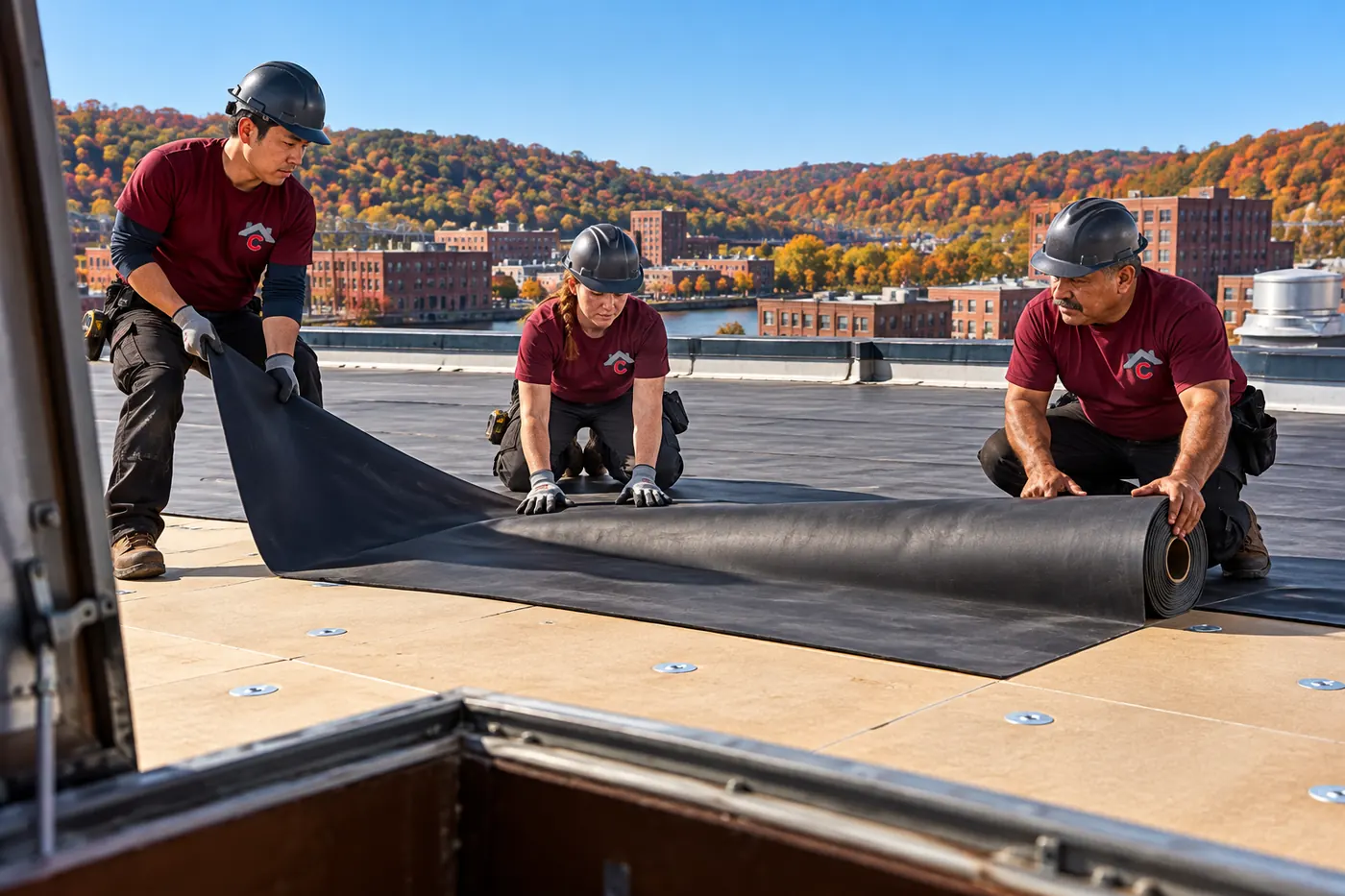
Flexible rubber forms around party walls, steps, and offsets with few pieces. Fewer seams means fewer laps next to the shared wall.
EPDM Roofing →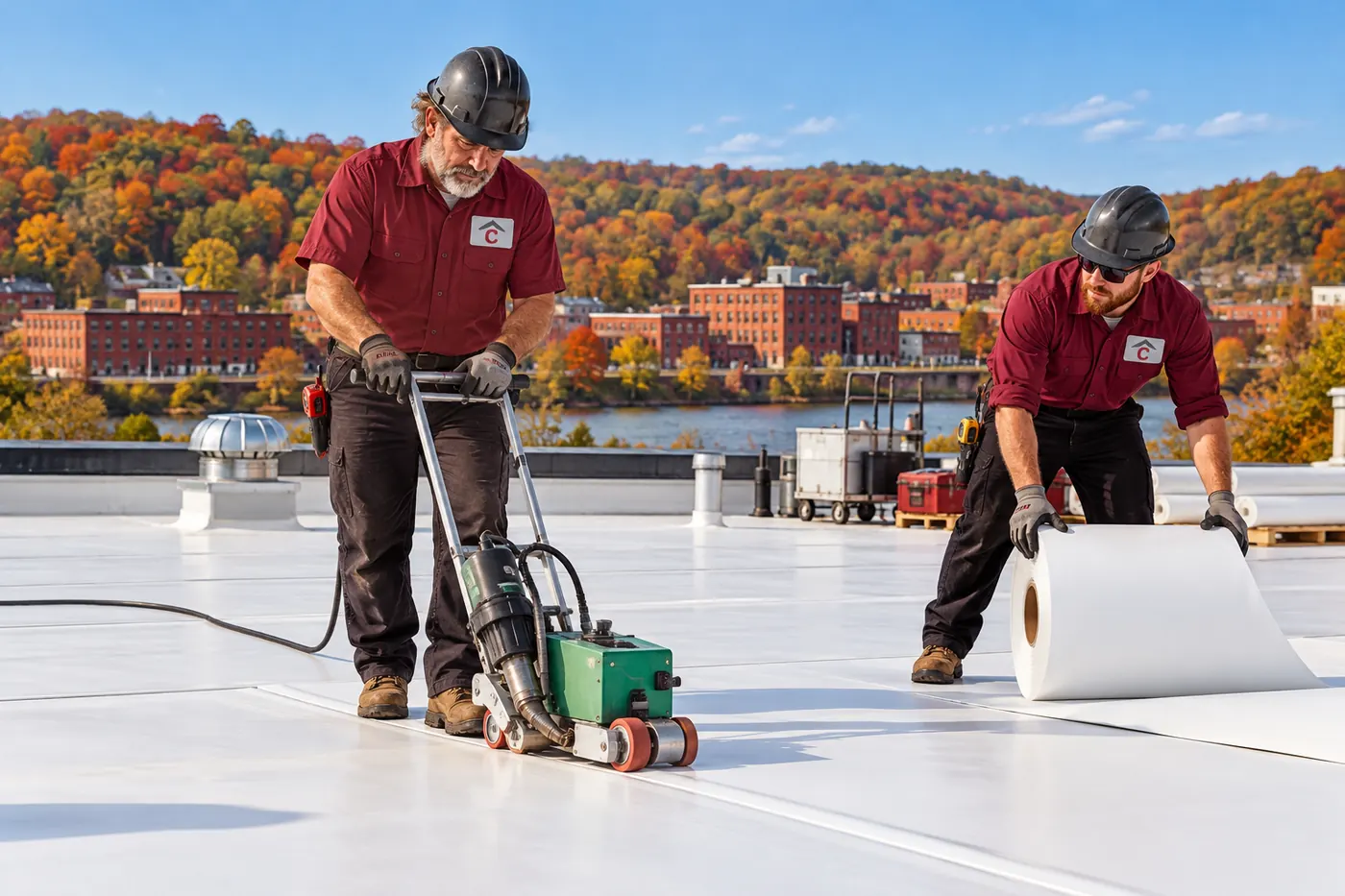
White welded membrane where storefronts run air conditioning below. Welds at the party wall get probed like every field seam.
TPO Roofing →Re-flashing a shared wall when the rest of the roof is still dry. The rest of the roof stays as it is when its insulation is dry.
Roof Repair →A single dry roof on a narrow building can take a recover board and new sheet. Wet spots found by core cut get removed before the board goes down.
Flat Roofing →Call us. We check both sides of the wall before deciding who fixes what.
Attached buildings add a neighbor conversation to the usual order of work.
We walk the field, then look closely at the party wall, step joints, and the neighbor’s drains near the line. Photos of the shared wall go to both owners.
Flashing that crosses onto the next roof, and ladder or lift spots, get agreed before work starts. A short note between owners settles who pays for what.
Campbell County building inspection issues the permit for the commercial roof work. The scope names the party wall work clearly.
The roof comes off in sections, wet insulation goes, and the new membrane goes down. Each section closes before evening, including at the wall.
Wall flashing, counterflashing, and coping finish the party wall, then gets checked from both sides. Both owners get photos of the finished joint.
Beyond Bellevue, we take commercial roofing work in Covington and these towns.
Elsewhere near Bellevue? Call us or send us a message.
Covington neighborhood shops and retail roofs.
Latonia Commercial Roofing →Hillside lots beside I-71/75.
Fort Wright Commercial Roofing →Industrial lots along the Licking River.
Wilder Commercial Roofing →Dixie Highway shops under wooded slopes.
Park Hills Commercial Roofing →Large retail and office roofs uphill.
Southgate Commercial Roofing →Equipment-heavy office and institutional roofs.
Highland Heights Commercial Roofing →Historic district roofs and riverfront blocks.
Newport Commercial Roofing →Riverside buildings west of Covington.
Ludlow Commercial Roofing →Retail roofs on the US 27 corridor.
Cold Spring Commercial Roofing →Hilltop buildings in steady wind.
Fort Thomas Commercial Roofing →Low Ohio River lots, Kentucky code.
Dayton Commercial Roofing →Campbell County’s building inspection office handles commercial roof permits in Bellevue. On attached buildings the replacement plan also covers the wall shared with the neighbor, and talking with that owner before tear-off matters because flashing at a party wall often touches both roofs.
New wall flashing runs up the party wall parapet and is capped with coping. Where roof heights differ, counterflashing tucks into the taller wall, and drains on either side get set so water stays off the joint.
Yes, but the work at the shared wall goes better with the neighbor in the loop. Agreeing on access and on where flashing laps onto their roof avoids disputes later.
Water crossing a party wall is traced before anyone pays for repairs. If the opening sits on the neighbor’s side, the photos and notes from the roof walk give both owners the same facts.
Tear-off noise carries through shared walls, so tenants on both sides hear the work for the days the crew is near the wall. Giving them notice of those days heads off complaints.
Owners settle it between themselves, and a short written note before tear-off avoids arguments. Many split the cost of the shared coping and wall flashing, since both buildings stay drier once the joint is closed properly.
Narrow storefront roofs go in section by section, each closed before evening. Expect noise overhead and a crew near the rear alley, and plan deliveries for the hours the dumpster is not being loaded.
Tell us about the building and its neighbors, and we will walk the roof with you.