Corners
Fluttering Corner Sheets
Mechanically attached membrane lifts between plate rows at corners on gusty days.
As a Fort Thomas commercial roofing contractor, we build wind-ready roofs for hilltop offices, schools, churches, and shops, starting at the corners and edges.
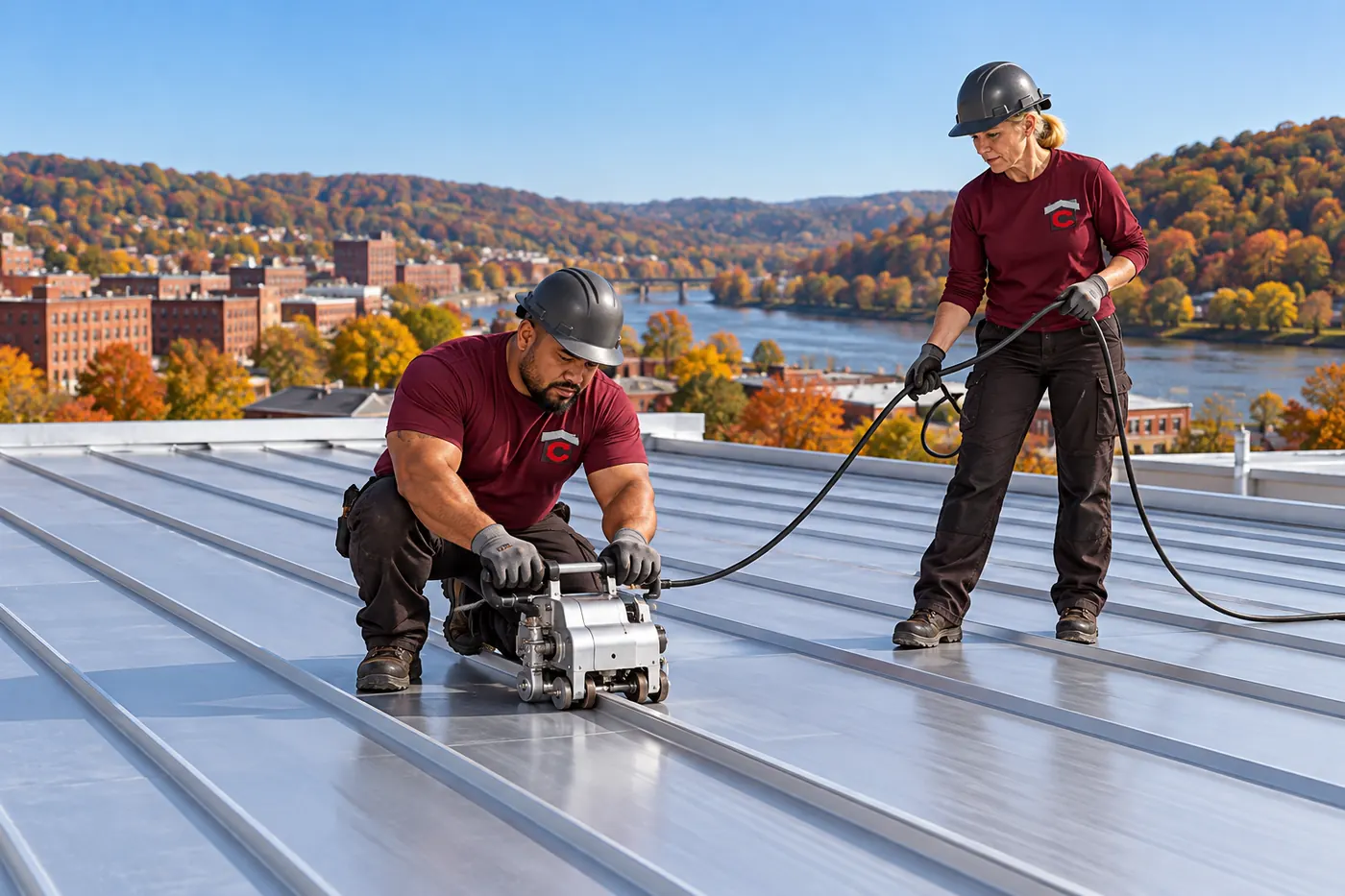
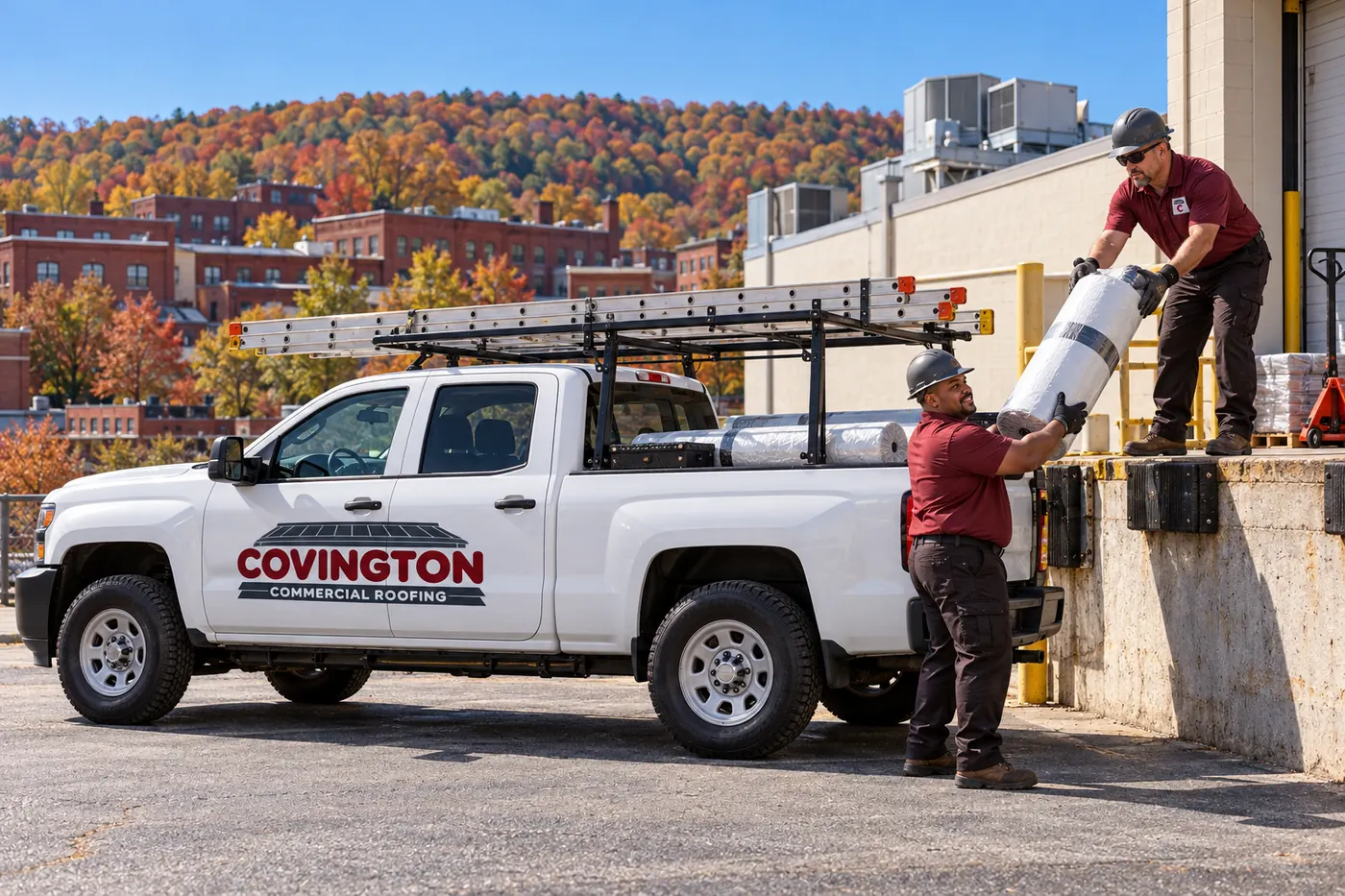
Every roof a Fort Thomas commercial roofing contractor replaces gets its corners and edges planned first. Fort Thomas occupies hilltops overlooking the Ohio River, so commercial buildings on exposed lots see more wind than those in the valley.
Wind pulls hardest at roof corners and perimeters. That is where fastener rows tighten, adhesive goes on full, and edge metal has to be a tested design.
Exposed hilltop buildings show wind wear in predictable places.
Mechanically attached membrane lifts between plate rows at corners on gusty days.
Edge metal without tested cleats lets wind under the perimeter first.
Ridge caps fastened too far apart rattle loose on pitched metal roofs.

Unsecured walkway pads and panels left on the roof become projectiles in storms.
Hatch lids with worn gaskets lift in gusts and let rain blow in around the curb.

Wind-driven grit wears thin spots in older membranes on fully exposed hilltop roofs.
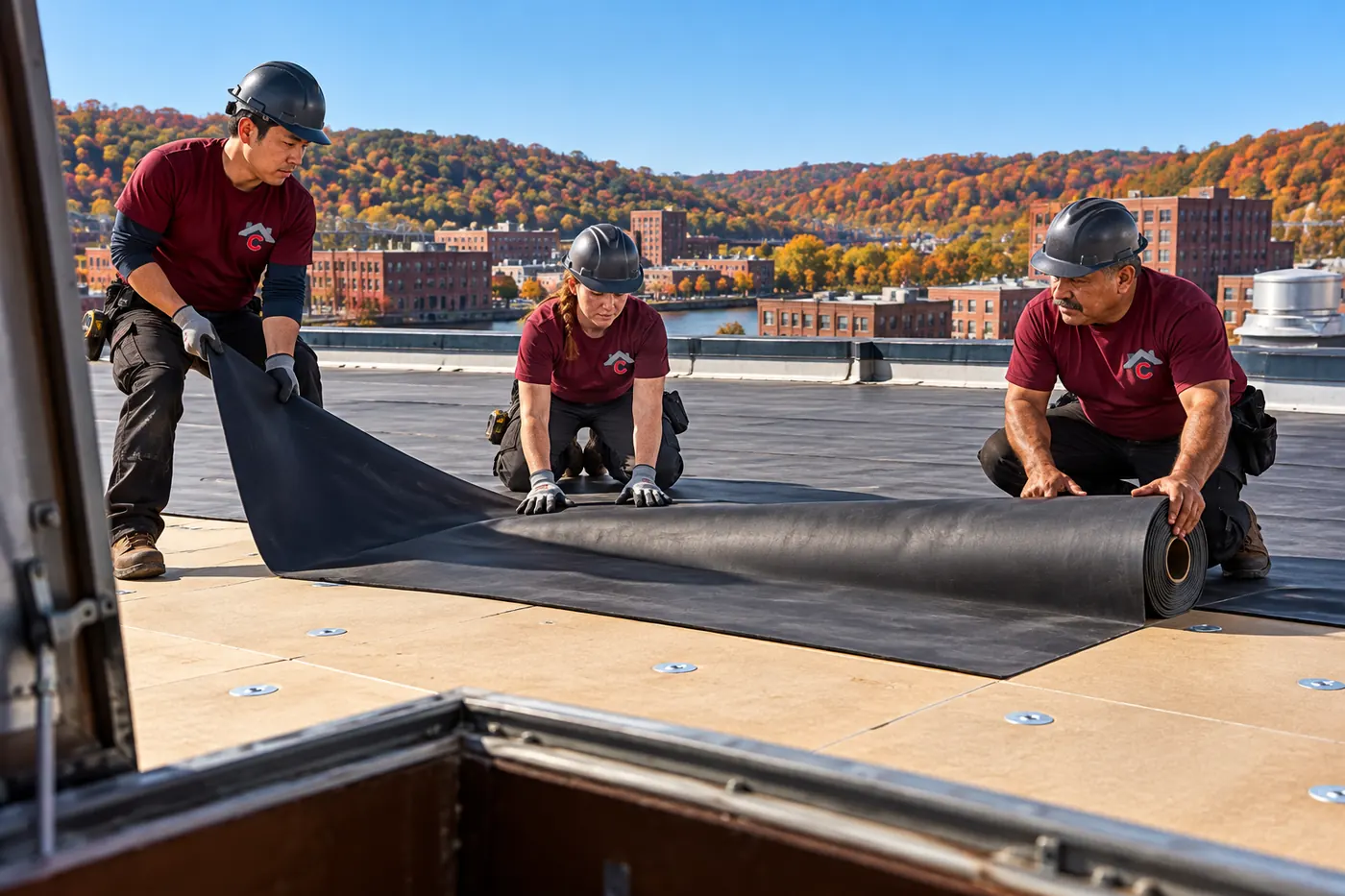
A Fort Thomas roof built for wind holds its edges through storm season.
Adhered sheets or closer fastener rows keep corner zones from fluttering loose.
Tested edge and coping designs stay locked at the perimeter where storms pull first.
Cover board over the insulation resists hail dents and foot traffic.
Ridge caps and rakes fastened at the maker’s spacing stay put on pitched roofs.
Fort Thomas buildings mostly land on one of these.
An adhered white sheet gives wind no plate rows to grab on exposed lots. Corner zones get the adhesive first, then the field.
TPO Roofing →Clip-fastened panels with tested trim for churches and offices with pitch. Ridge caps go on at the spacing printed by the panel maker.
Metal Roofing →Adhesive-held rubber for schools and shops with many walls and offsets. Inside corners get stretched flashing pieces instead of seams.
EPDM Roofing →Lifted coping, flashing, and ridge caps reset after a strong storm. Repairs go in before the next storm reaches the open edge.
Roof Repair →Call us before the next rain. Edges peel back fastest once wind gets under them.
Wind zones get marked before any material is ordered.
We walk edges first, checking coping, gravel stop, and corner sheets for lift, then the field and curbs. Lifted corners get photographed for insurance records.
Corner and perimeter zones get drawn on the roof plan with their fastening or adhesive pattern. The plan shows which zones get adhesive or tighter rows.
Commercial permits go through the Campbell County building inspection office. The county reviews edge metal as part of the scope.
Insulation, cover board, and membrane go down, with corners finished before the perimeter metal. No edge stays open overnight on a windy forecast.
Cleated coping, edge metal, and tied-down walkway pads finish the roof. Every pad and loose item gets tied down before the crew leaves.
Beyond Fort Thomas, we take commercial roofing work in Covington and these towns.
Elsewhere near Fort Thomas? Call us or send us a message.
Covington neighborhood shops and retail roofs.
Latonia Commercial Roofing →Hillside lots beside I-71/75.
Fort Wright Commercial Roofing →Industrial lots along the Licking River.
Wilder Commercial Roofing →Dixie Highway shops under wooded slopes.
Park Hills Commercial Roofing →Large retail and office roofs uphill.
Southgate Commercial Roofing →Equipment-heavy office and institutional roofs.
Highland Heights Commercial Roofing →Historic district roofs and riverfront blocks.
Newport Commercial Roofing →Riverside buildings west of Covington.
Ludlow Commercial Roofing →Retail roofs on the US 27 corridor.
Cold Spring Commercial Roofing →Attached storefronts with party walls.
Bellevue Commercial Roofing →Low Ohio River lots, Kentucky code.
Dayton Commercial Roofing →Hilltop lots above the Ohio River see more wind, so corners and edges get the most attention: fully adhered membrane or tighter fastener rows at corners, tested edge metal and cleated coping, ridge caps at the maker’s spacing, and walkway pads secured against gusts.
Commercial roofing permits go through the Campbell County building inspection office. The state sheet also lists a city contact for Fort Thomas, but that one is reserved for single-family dwellings.
Low-slope roofs need edge metal of a tested design, fastened with continuous cleats. Older bent-metal edges without cleats are the first thing storms peel back.
Cover board over the insulation takes hail hits that would dent foam board, and thicker membrane in exposed areas adds wear room. Metal panels dent but usually keep shedding water.
Walk the roof edges for lifted coping caps and check drains for debris before the next rain. Photos of any damage help with insurance and repairs.
Adhesive and labor usually run higher than screws and plates, but on exposed hilltop lots the adhered sheet resists flutter at corners and edges. Many Fort Thomas roofs use adhesive only in corner and perimeter zones, with fasteners in the field.
Hatches get new gaskets and working hold-open arms, and the curb gets flashed with the rest of the roof. A hatch that latches tight stops rain blowing in during the storms that hilltop buildings take first.
Tell us where the building sits and what the wind has loosened, and we will walk it.