If Your Roof
Has One Existing Roof and Dry Insulation
A single dry roof can take a recover board and new membrane over the top.
Start WithRecover

As a Covington flat roofing contractor, we replace and recover low-slope roofs of every membrane type, starting with a moisture check of the insulation under them.
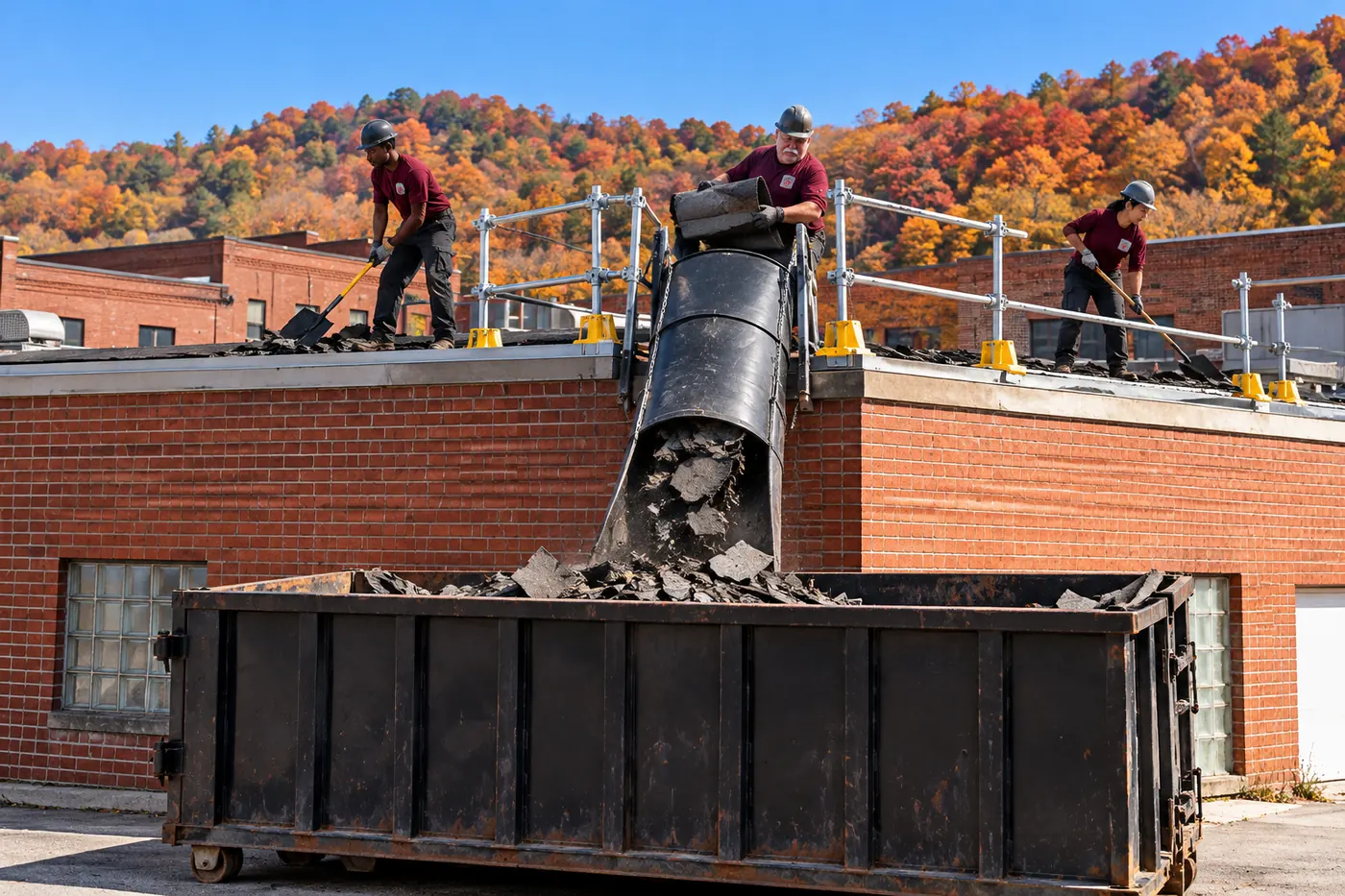
A Covington flat roofing contractor reads the layers under your membrane before anyone talks about the new one.
A single dry roof can take a recover board and new membrane over the top.
Tapered insulation and crickets behind curbs move water toward the drains on the new roof.
Kentucky’s building code bars a third layer, so both come off down to the deck.
Deck panels that rust along many flutes need replacing, which means the roof comes off first.
Low-slope roofs tell you what is happening underneath if you know where to look.

Spongy areas mean wet insulation below the membrane, mapped by infrared scan or core cuts.
Dirt rings mark where water sits after rain, often between drains or behind curbs.
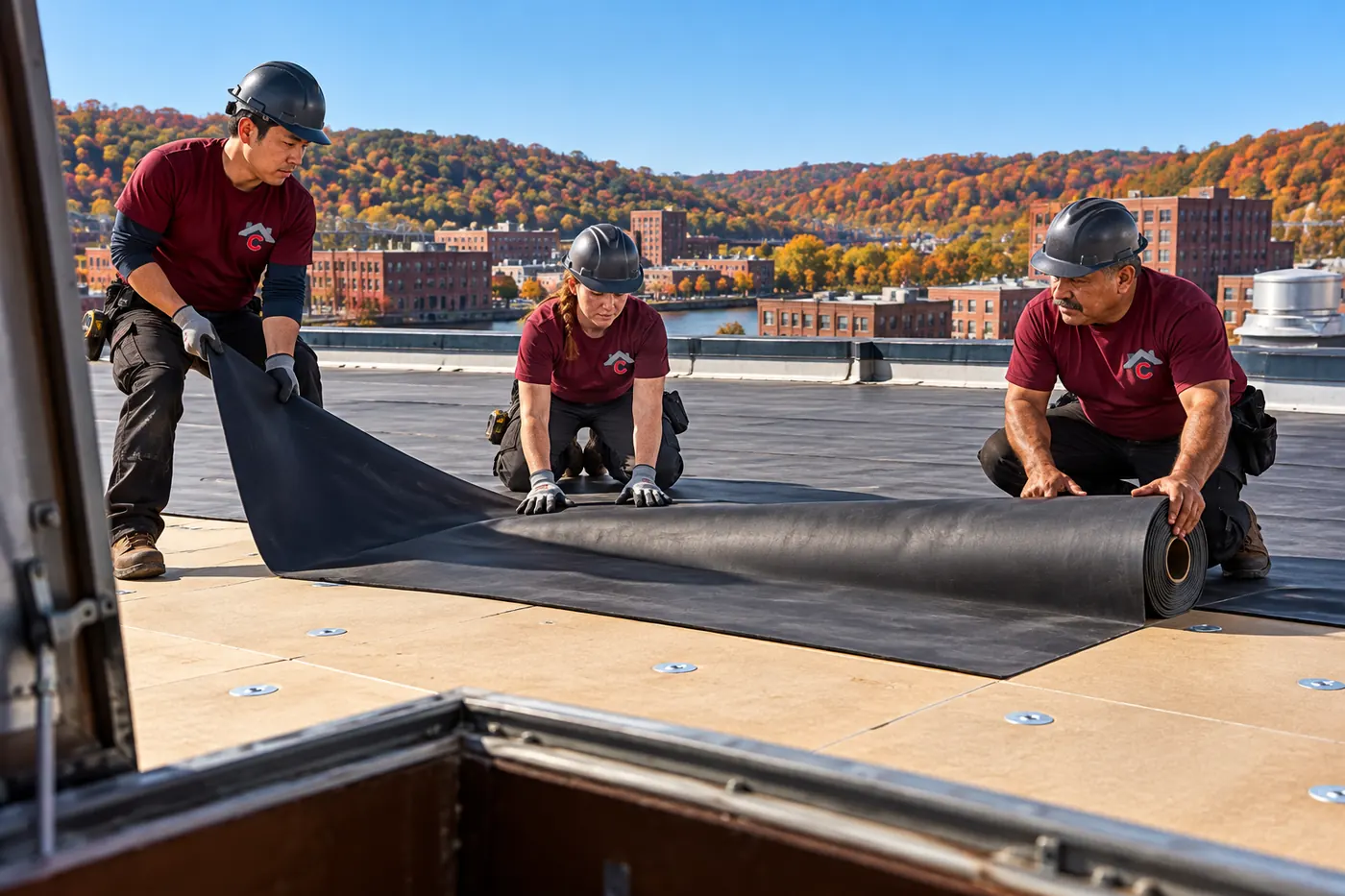
Built-up and modified bitumen roofs blister where moisture is trapped between plies.
Old cast drains crack or rust, and a new roof raises the surface around them.
Curbs that barely clear the old roof will sit too low once new insulation raises the surface.
Water standing against a parapet soaks the base flashing and works behind it into the wall.
Every flat roof job lands on one of these three paths after the moisture survey.

One dry existing roof gets a cover board or recovery board, then a new membrane, with every wet area cut out first.
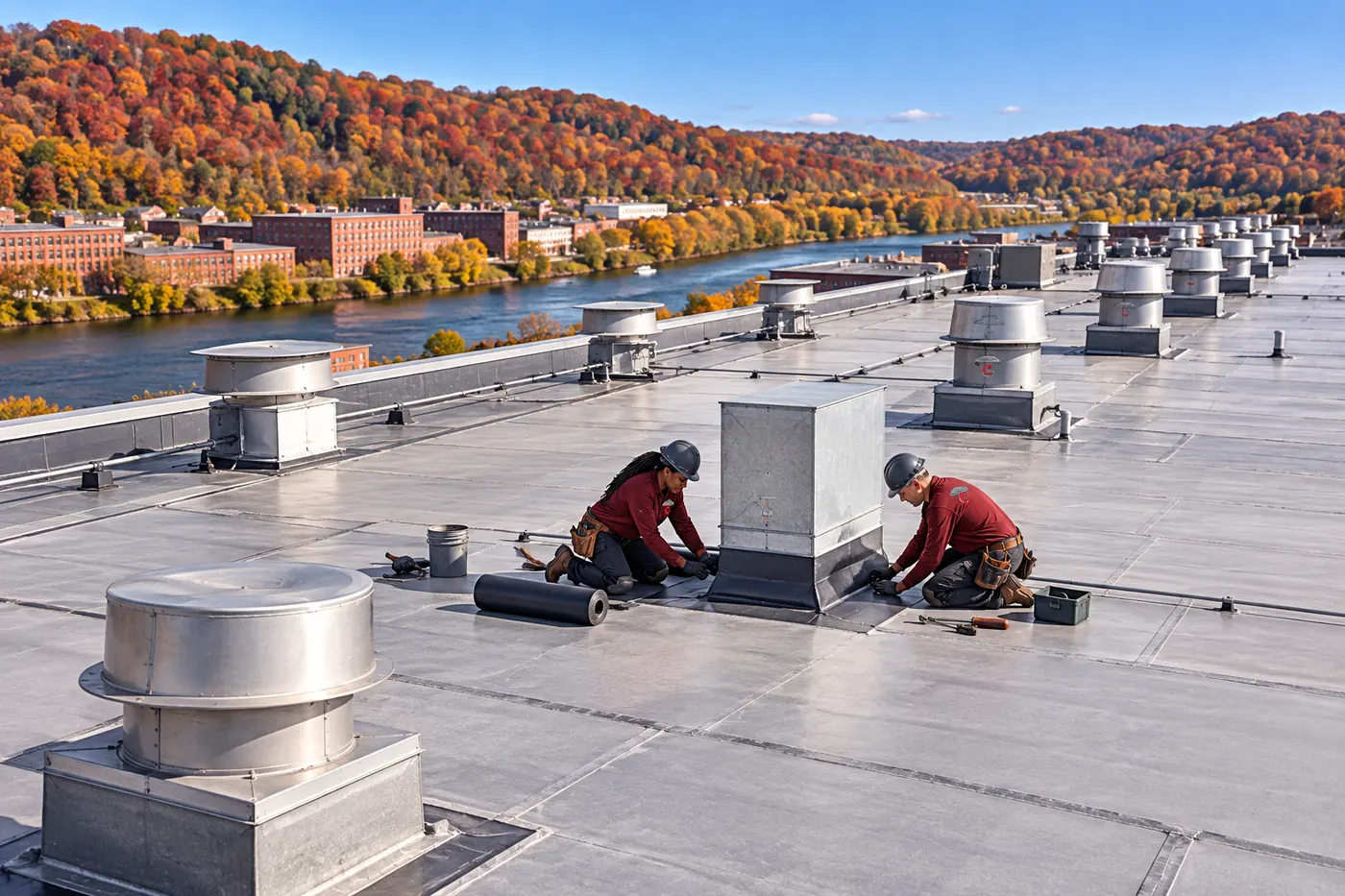
Everything comes off to the deck, soft or rusted deck panels are replaced, and new insulation and membrane go down.
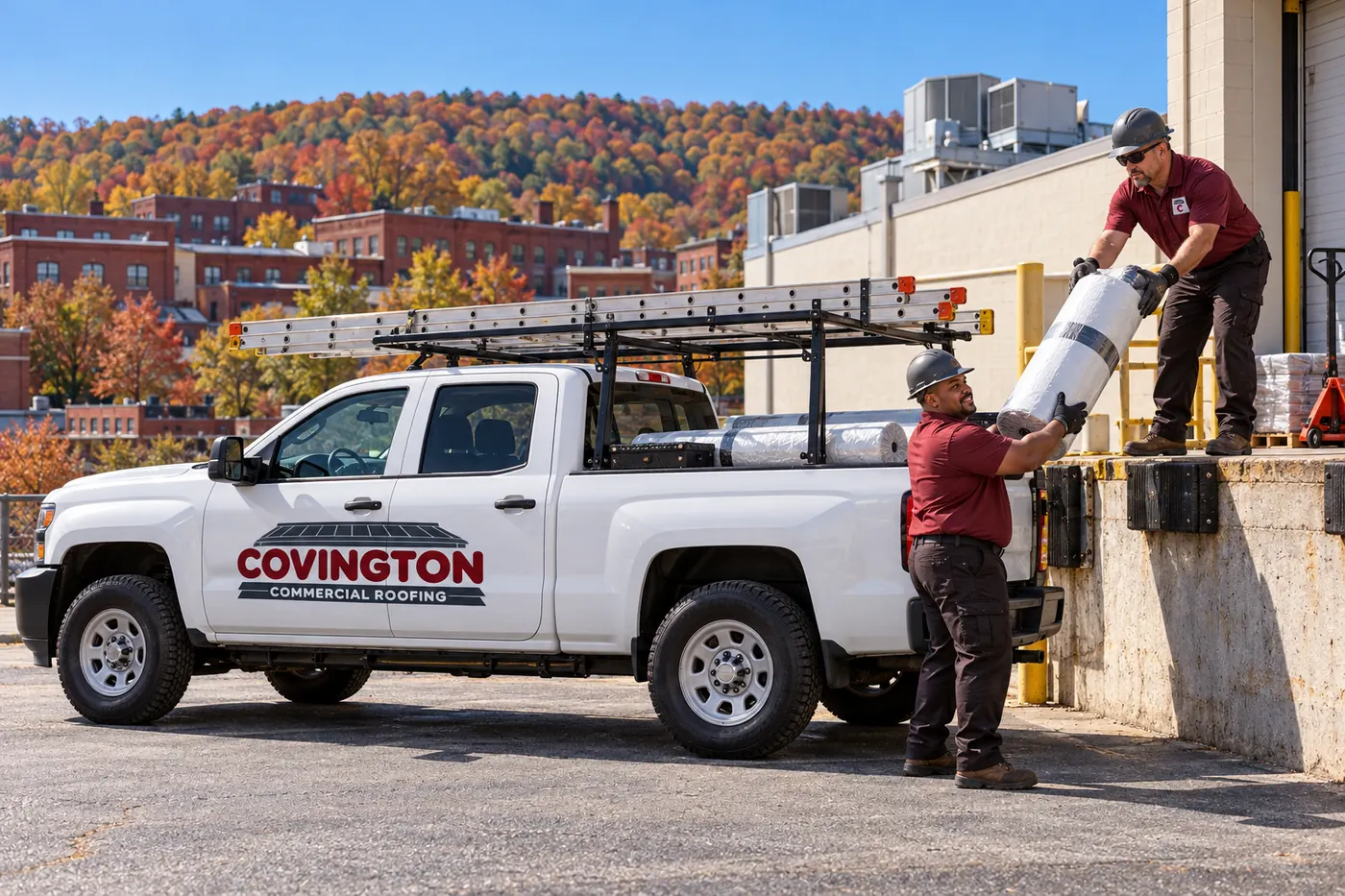
Retrofit framing creates slope for new metal panels above the old membrane, after an engineer checks the structure.
Metal Roofing →
A new low-slope roof fixes drainage and insulation at the same time as the membrane.
Tapered board, saddles between drains, and sumps at each bowl keep water from sitting at midspan.
Replacement is when insulation thickness gets checked against the energy code level the permit office asks for.
Drains, scuppers, coping, and gravel stop get reset to the thicker roof so water and wind meet tested edges.
Tearing off old layers removes hidden wet felts and lets the crew see the deck before covering it again.
Call us or ask for an estimate. A moisture scan shows how much of the roof can stay before any plan is set.
Flat roof jobs follow a fixed order so each layer goes down over a dry, checked base.
We walk the membrane, edges, and drains, then mark soft spots and ponding rings on a roof plan.
An infrared scan or core cuts show where insulation is wet and has to come out.
Layer count, wet area, and deck condition set the path under the code’s reroofing rules.
Tapered insulation, crickets, and cover board go down, then the membrane and flashing.
Drain bodies, overflow scuppers, and edge metal are set to the new roof height and checked.
Flat roof projects often pull in one of these.
The usual membrane for flat roofs over cooled space, welded at every lap and flashed at each curb.
See TPO Roofing →Rubber membrane for irregular or ballasted flat roofs, and for additions tied into an existing rubber roof.
See EPDM Roofing →Point repairs at seams, boots, and drains when the moisture scan shows the insulation is still dry.
See Commercial Roof Repair →Two things decide it: how many roofs are already on the building and how wet the insulation is. A single dry roof can be recovered with a cover board and new membrane. Two existing coverings, or water-soaked insulation over large areas, mean a tear-off to the deck.
Yes. Tapered foam board laid in a pattern with crickets behind curbs, saddles between drains, and sumps around each bowl moves water off a nearly flat deck. It goes in during a recover or replacement, since the membrane has to come up to place it.
An infrared scan on a clear evening shows wet areas holding heat longer than dry ones, and core cuts confirm what the scan suggests. Each cut is patched before the crew moves on, and the wet areas go onto a roof plan you keep.
They get reset. New insulation raises the roof surface, so drain bodies, scupper boxes, and edge metal move up with it. Cracked or rusted drains get replaced or fitted with retrofit inserts, and overflow scuppers get checked so a clogged drain has somewhere else to send water.
Crews open only what they can close by evening, so duration follows roof area, weather, and how many curbs and drains need hand flashing. A walk-through gives you the number of sections the roof splits into, which is the honest way to plan it.
Replacement work in Covington starts with a city zoning permit and then a building permit from Planning and Development Services of Kenton County. Retrofit framing and new curbs are other scopes likely to need one, while small repairs usually do not.
Clogged strainers, drains set above the surrounding roof, and a deck that has sagged between joists all hold water longer. Each wet cycle adds weight that deepens the sag, which is why ponding on old roofs tends to spread year over year.
Send the address and where water ponds, and we will schedule the moisture check.