Commercial Roof Repair
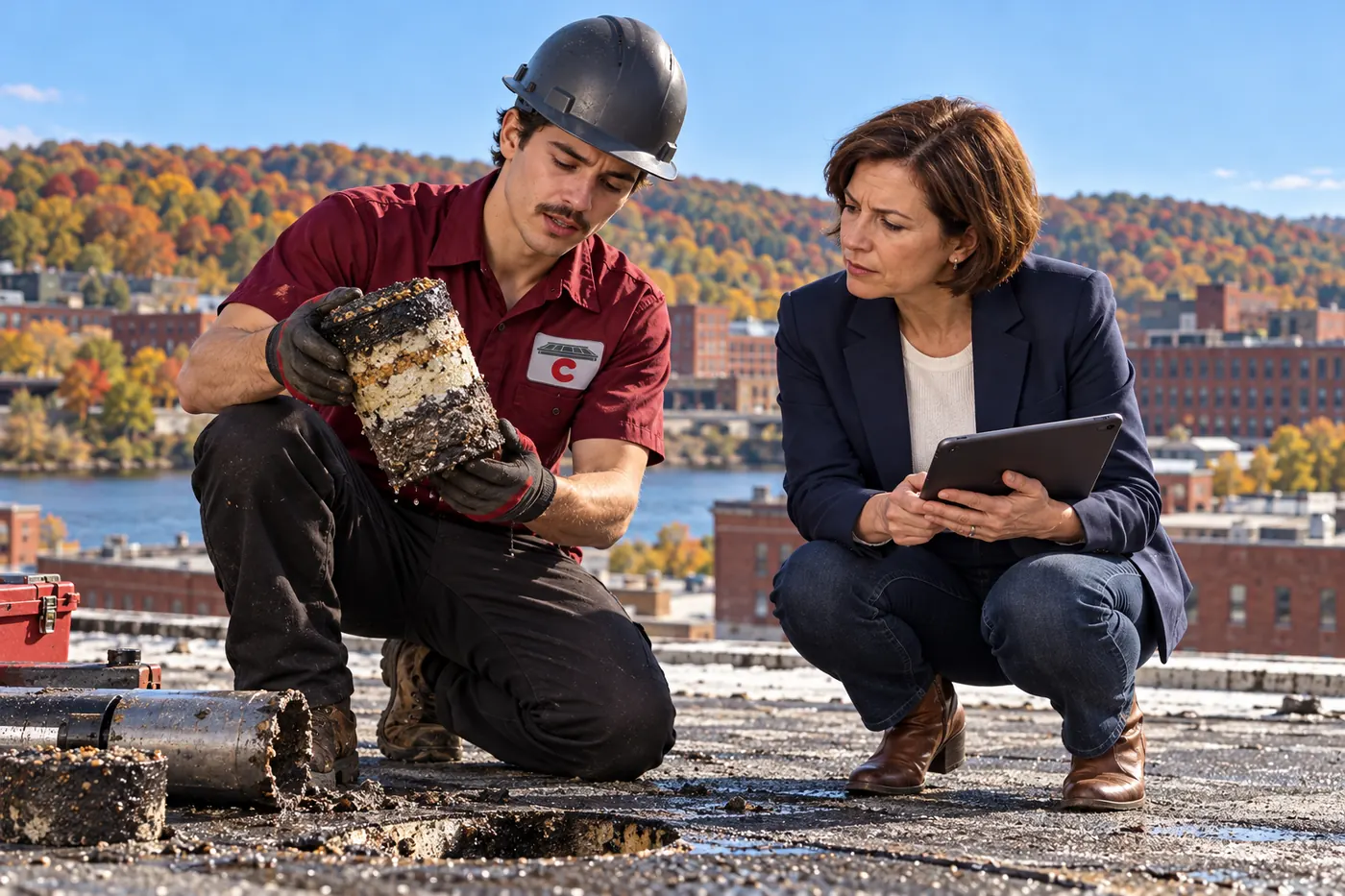
Leaks at seams, curbs, boots, drains, and metal laps get traced from the stain inside to the opening on the roof, then fixed with matching parts.
See Roof Repair →
We offer commercial roofing services in Covington for membrane and metal roofs, from a single curb repair to a full tear-off and replacement.
Each of our commercial roofing services in Covington starts with the same roof walk, then branches by system and condition.
Leaks at seams, curbs, boots, drains, and metal laps get traced from the stain inside to the opening on the roof, then fixed with matching parts.
See Roof Repair →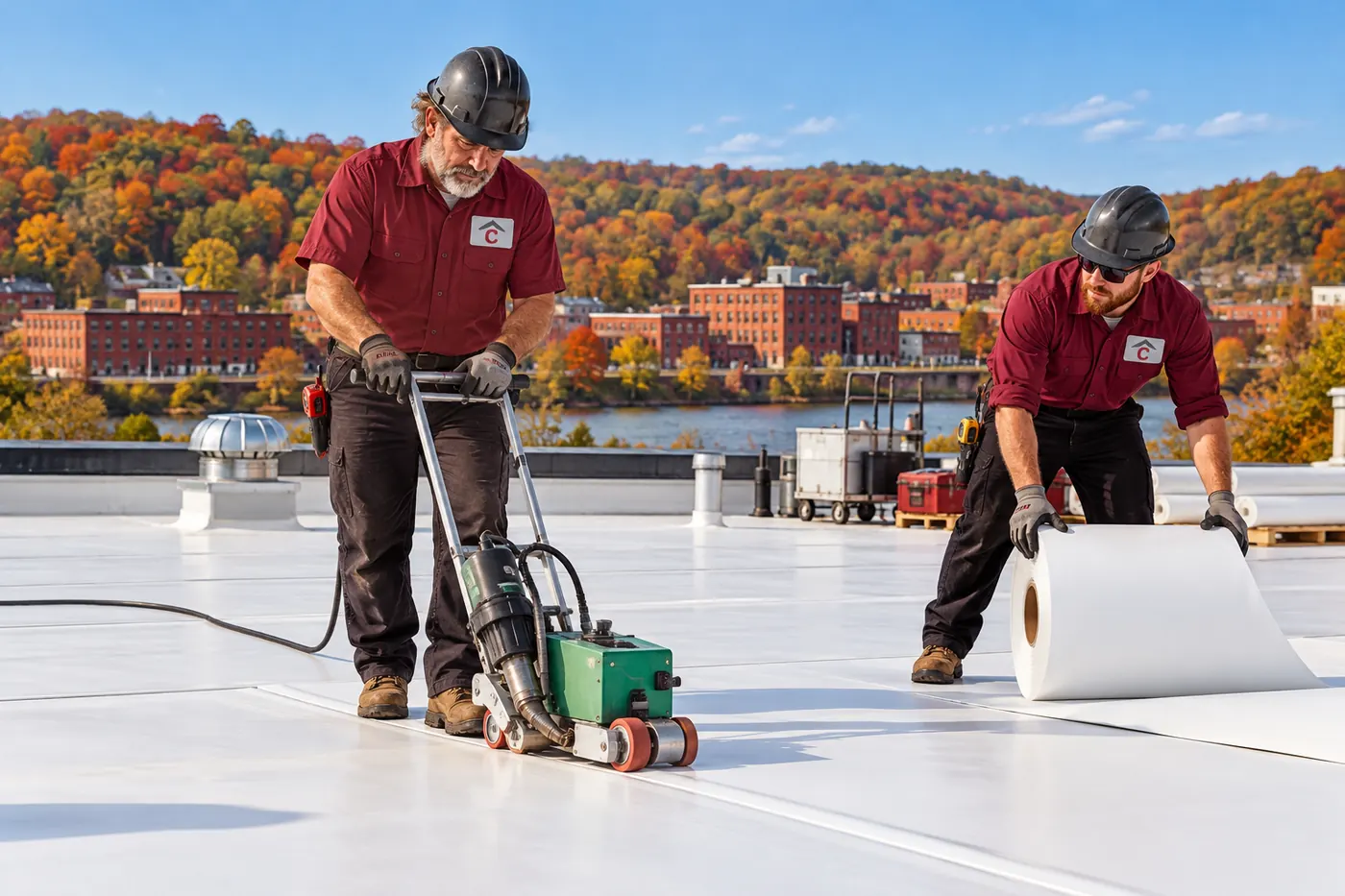
Welded white membrane for warehouses, retail, schools, and offices with cooled space below, fastened or fully adhered.
See TPO Roofing →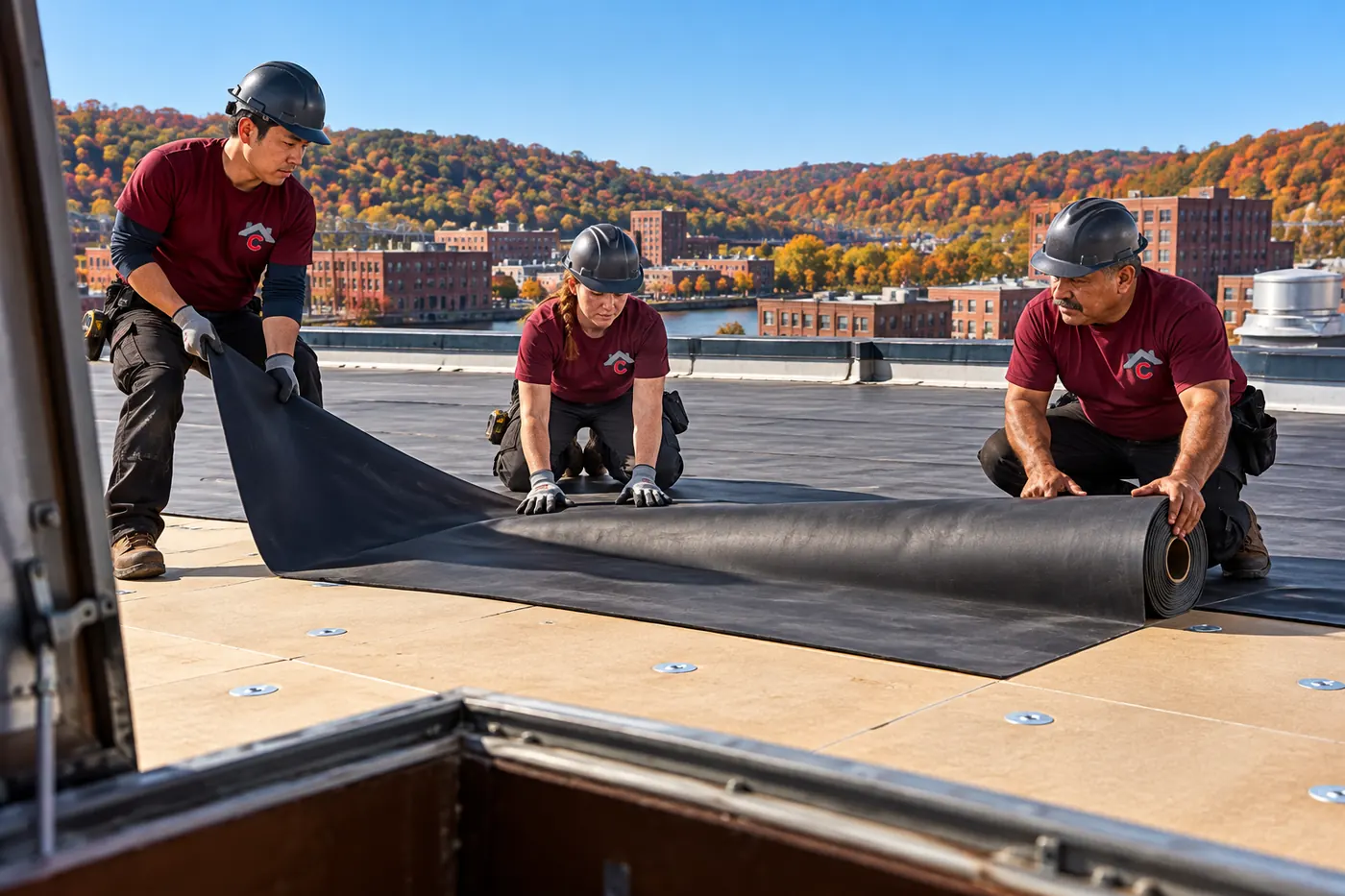
Wide rubber sheets with primed, taped laps for irregular roofs, ballasted roofs, and buildings heated more than cooled.
See EPDM Roofing →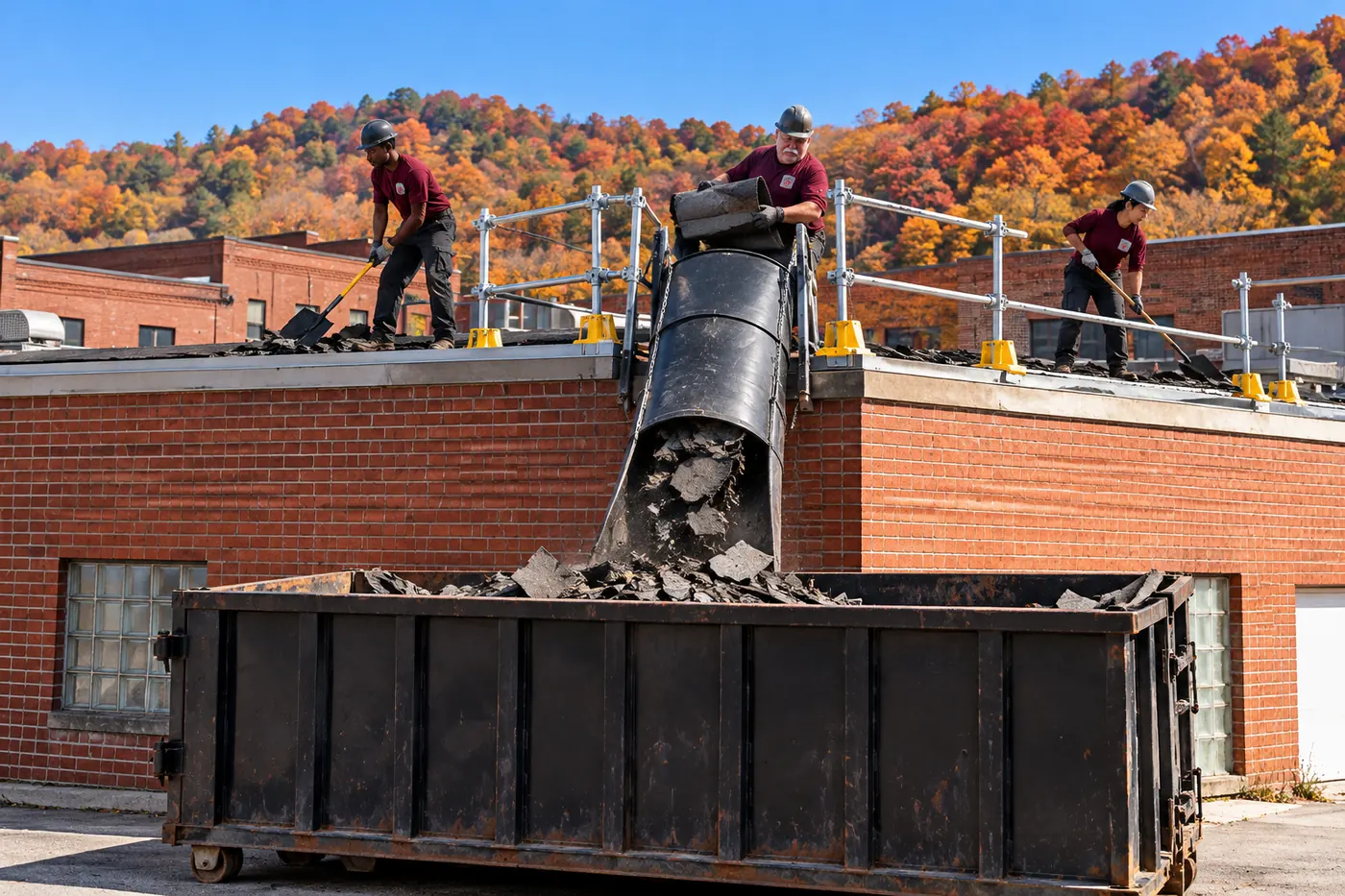
Moisture scans, recover or tear-off decisions, and tapered insulation for low-slope roofs that pond or feel soft underfoot.
See Flat Roofing →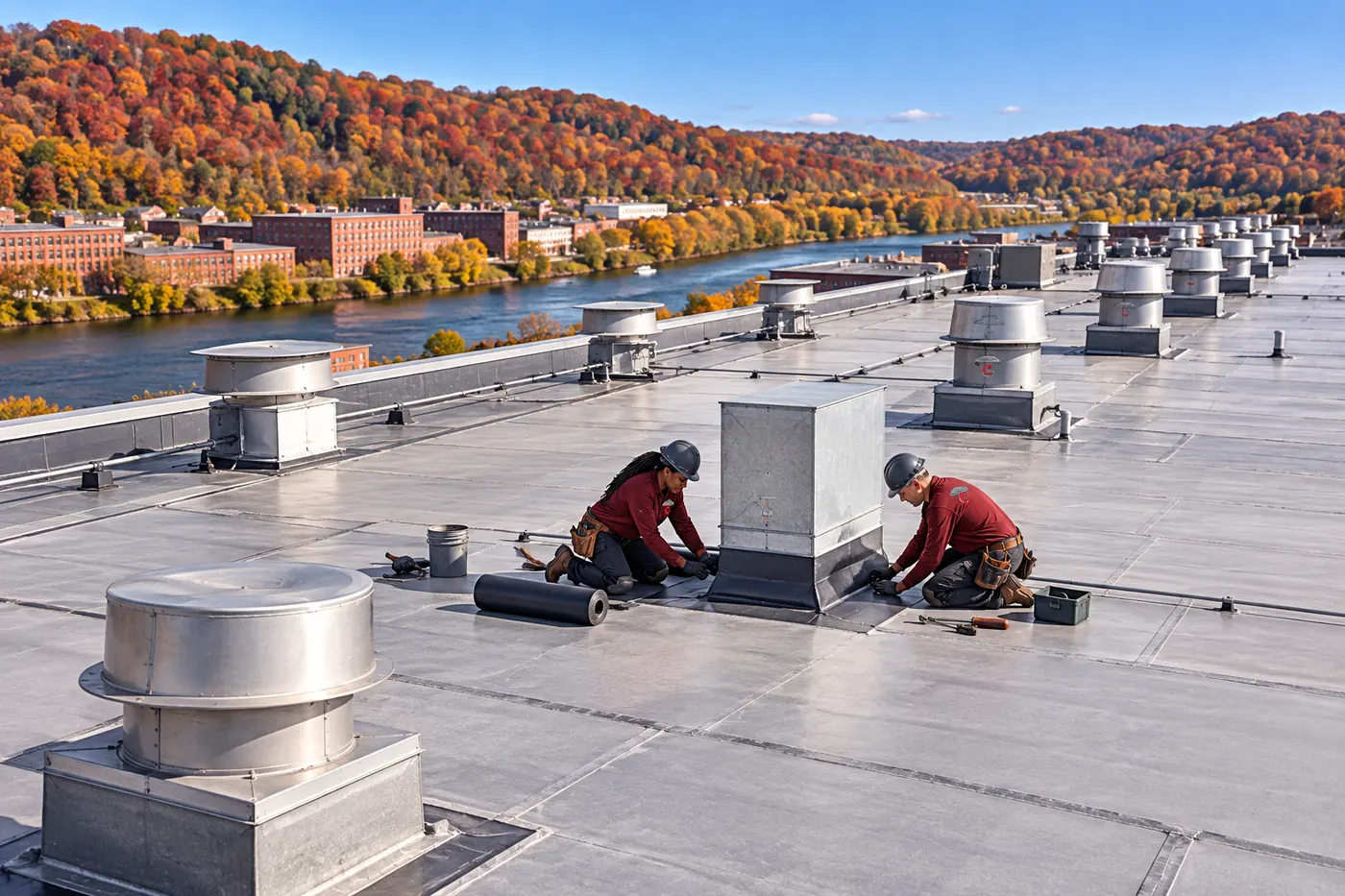
Plant and distribution roofs replaced bay by bay, with grease-rated zones, raised curbs, and rated assemblies.
See Industrial Roofing →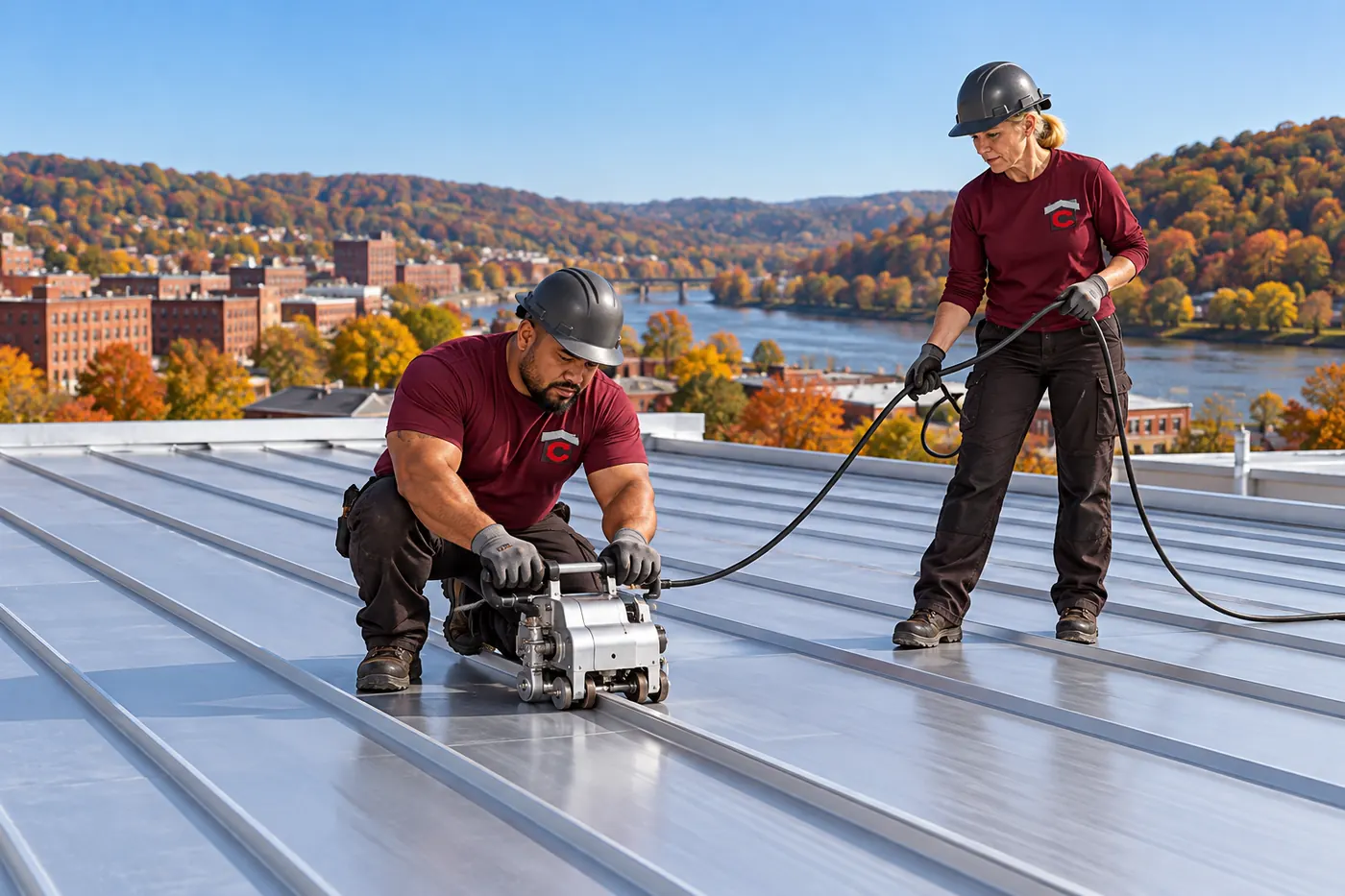
Standing seam and R-panel roofs installed, repaired, and maintained, plus retrofit framing over old flat roofs.
See Metal Roofing →Single-ply membranes, metal panels, and older built-up roofs cover most Northern Kentucky commercial buildings. Slope decides much of the choice.
| System | Slope | Seams or Joints | Where You See It |
|---|---|---|---|
| TPO | Low slope | Heat-welded laps | Warehouses, retail, offices |
| EPDM | Low slope | Taped laps | Older flat roofs, additions |
| Standing seam metal | Low to steep | Raised seams on clips | Churches, newer shops, offices |
| R-panel metal | Moderate to steep | Screwed side laps | Pole barns, shops, plants |
| Built-up or mod bit | Low slope | Felts or torched laps | Older schools, downtown blocks |
Call us with the building type and what you see inside. The roof walk sorts it out before anything is priced.
Every service follows this order, whether the job is one curb or a whole plant roof.
We walk the field, edges, penetrations, and drains, then look at the deck from inside where it is visible, matching each stain to a detail above it.
Roofs headed for a recover or tear-off get an infrared scan or core cuts to show how much insulation can stay.
You get photos tied to each finding and a plain comparison of repair, recover, and replacement for that roof.
Kenton County jobs go through PDS after any city zoning step; Campbell County jobs go through the county or the city of Newport.
Crews open only what they can close by evening, with temporary tie-ins at the end of each section.
Seams get probed, every detail photographed, and the ground swept with magnets for fasteners.
Replacement makes sense when damage is spread across the roof instead of sitting at a few spots: wet insulation over large areas, seams opening along many laps, membrane shrinking off curbs and parapets, deck rust along many flutes, or metal panels rusted through across several runs. A moisture survey shows how much can stay.
A recover puts a new roof over the existing one; a tear-off removes everything to the deck. Kentucky’s reroofing rules bar a recover over a water-soaked or deteriorated roof, or on a building that already has two or more coverings. A recover still needs a cover board, and every wet area comes out first.
Tapered board has the slope cut in, laid with crickets behind curbs, saddles between drains, sumps at each bowl, and edge tapers toward scuppers. With the old roof off, replacement is the natural time to add it, and new insulation also has to meet the energy code level the permit office asks for.
Drains, scuppers, and edge metal all get reset because the new insulation raises the roof. Old drain bodies get inspected and replaced or fitted with retrofit inserts, primary scuppers get resized, and parapet roofs get overflow drainage checked so a clogged drain has another way out.
Crews tear off only what they can close by evening, check and replace deck, fasten insulation and cover board, install and flash the membrane, and seal the section with a tie-in. Debris goes down a chute or by crane, and metal roofs follow the same close-up-daily rule run by run.
Four roof conditions and the service each one usually starts with.
Kentucky code allows no third layer, so both come off down to the deck.
A single dry roof can take a recover board and new welded membrane over it.
Cracked boots get replaced and sealed while the rest of the roof keeps working.
Process exhaust decides the membrane before anything else gets planned.
Tell us about the building and the roof, and we will set up a walk.