If Your Roof
Covers Air-Conditioned Offices or Retail
A white TPO surface reflects summer sun and cuts heat gain into cooled space under the deck.
Start WithTPO Roofing
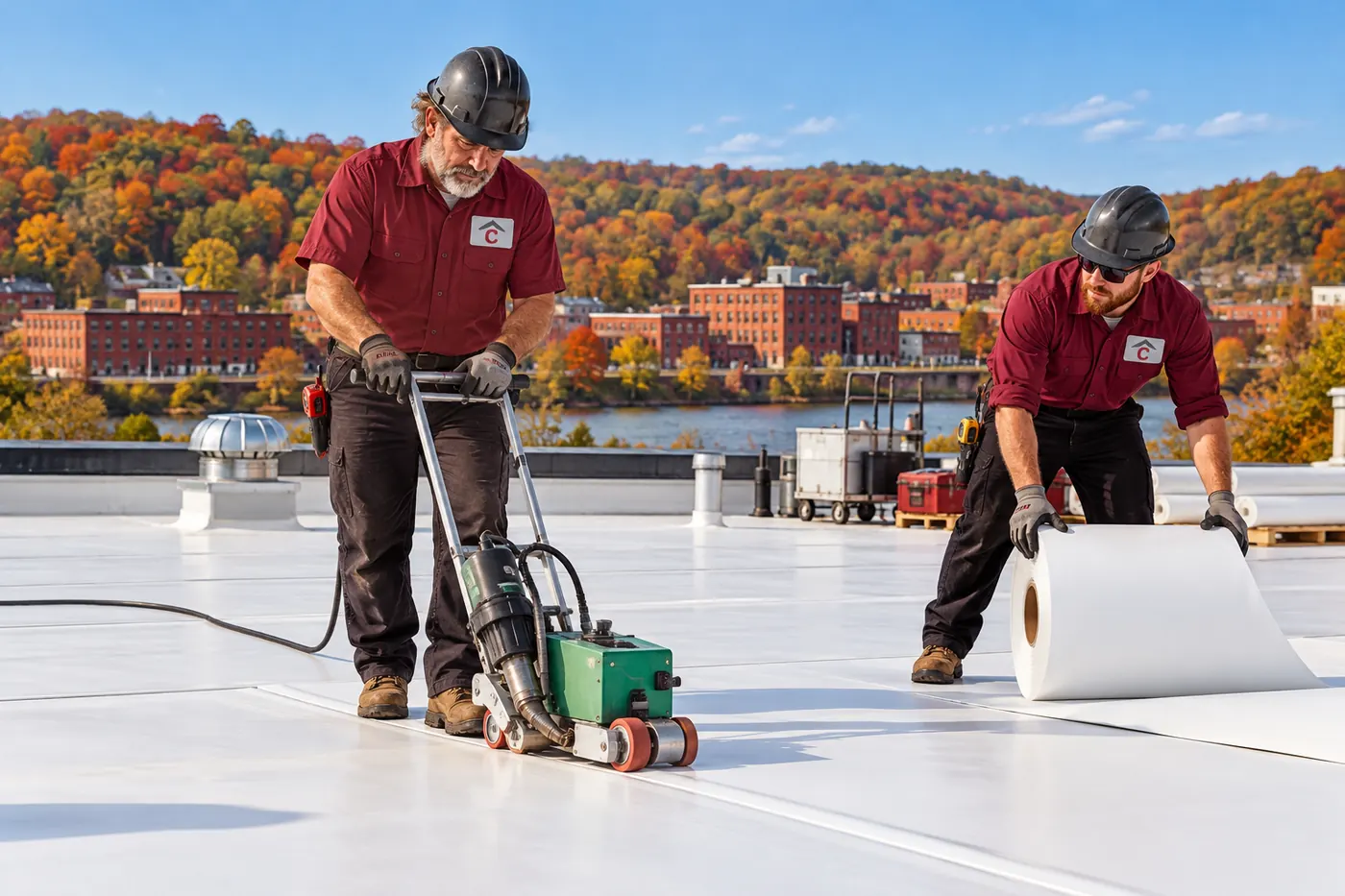
As a Covington TPO roofing contractor, we install white TPO membrane on low-slope warehouses, retail centers, schools, and offices, welding every lap with hot air.
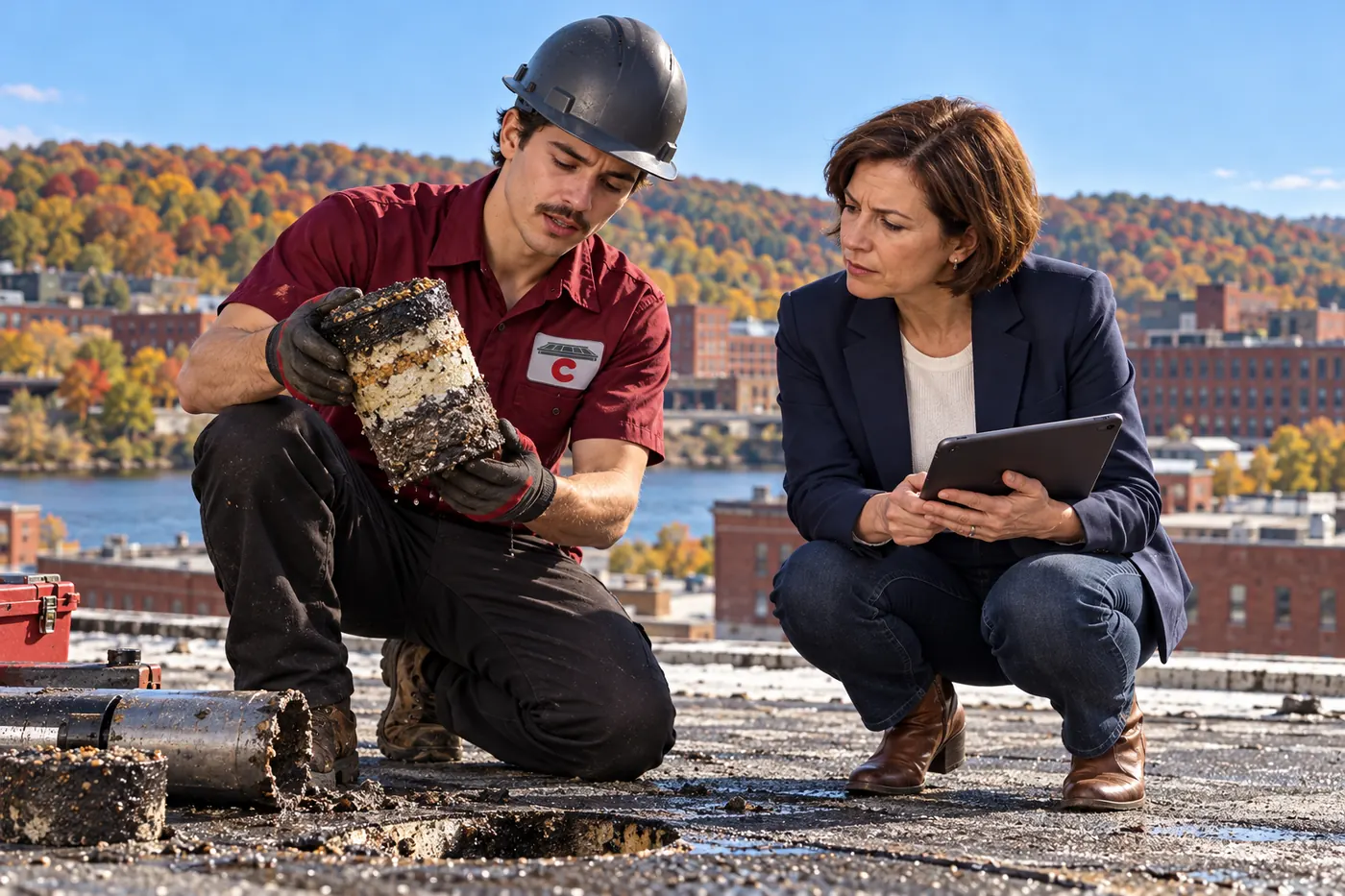
A Covington TPO roofing contractor looks at what sits under the roof and what comes out of its vents before recommending the sheet.
A white TPO surface reflects summer sun and cuts heat gain into cooled space under the deck.
Fully adhered TPO gives wind nothing to grab along plate rows, which suits exposed sites.
Flexible rubber forms around odd corners more easily than a stiffer thermoplastic sheet in cold weather.
TPO resistance to oils varies by maker, so fan areas on restaurant and plant roofs get PVC or a grease-rated sheet.
These are the TPO details that decide whether a roof gets a repair, a recover, or new membrane.
A seam probe catches gaps where the welder ran too fast or too cool, and those laps let water under the sheet.
Where three sheets meet, a small step in the lap needs a welded patch to close it.
Membrane run up the curb sides has to tuck under the unit’s counterflashing, or water gets behind it.
Foot traffic from hatch to rooftop units scuffs thin sheets unless walkway pads are welded down.
Low-slope edge metal has to be a tested design, and loose gravel stop lets wind peel the sheet back from the perimeter.
Sheet edges that slip out of a drain’s clamping ring lets water run under the sheet right at the lowest point of the roof.
Three ways to hold a TPO roof down, matched to the deck, wind, and weight the structure can carry.
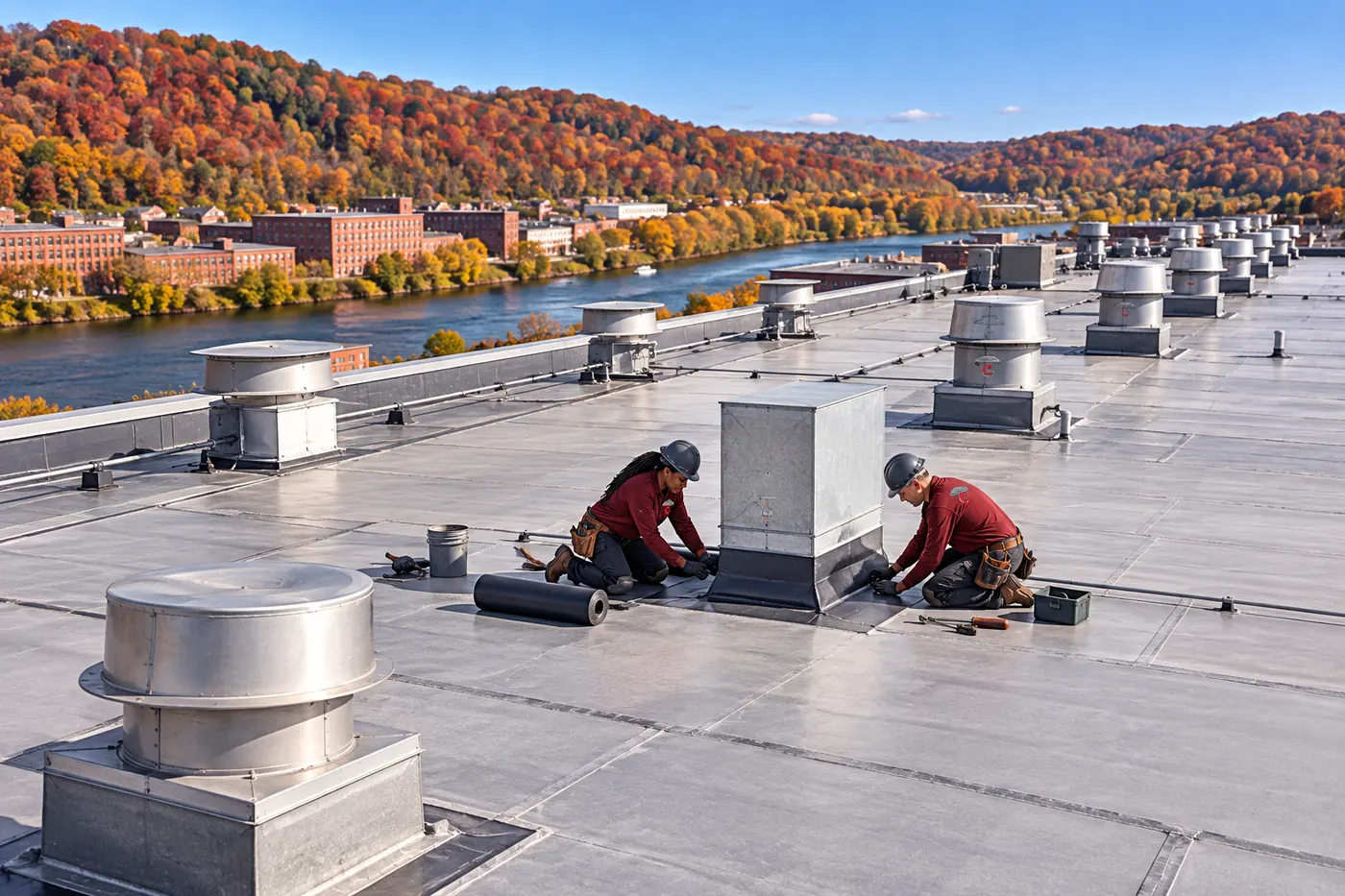
Screws and plates in the laps hold the sheet to steel or wood decks at a lower material cost; corners get tighter rows.
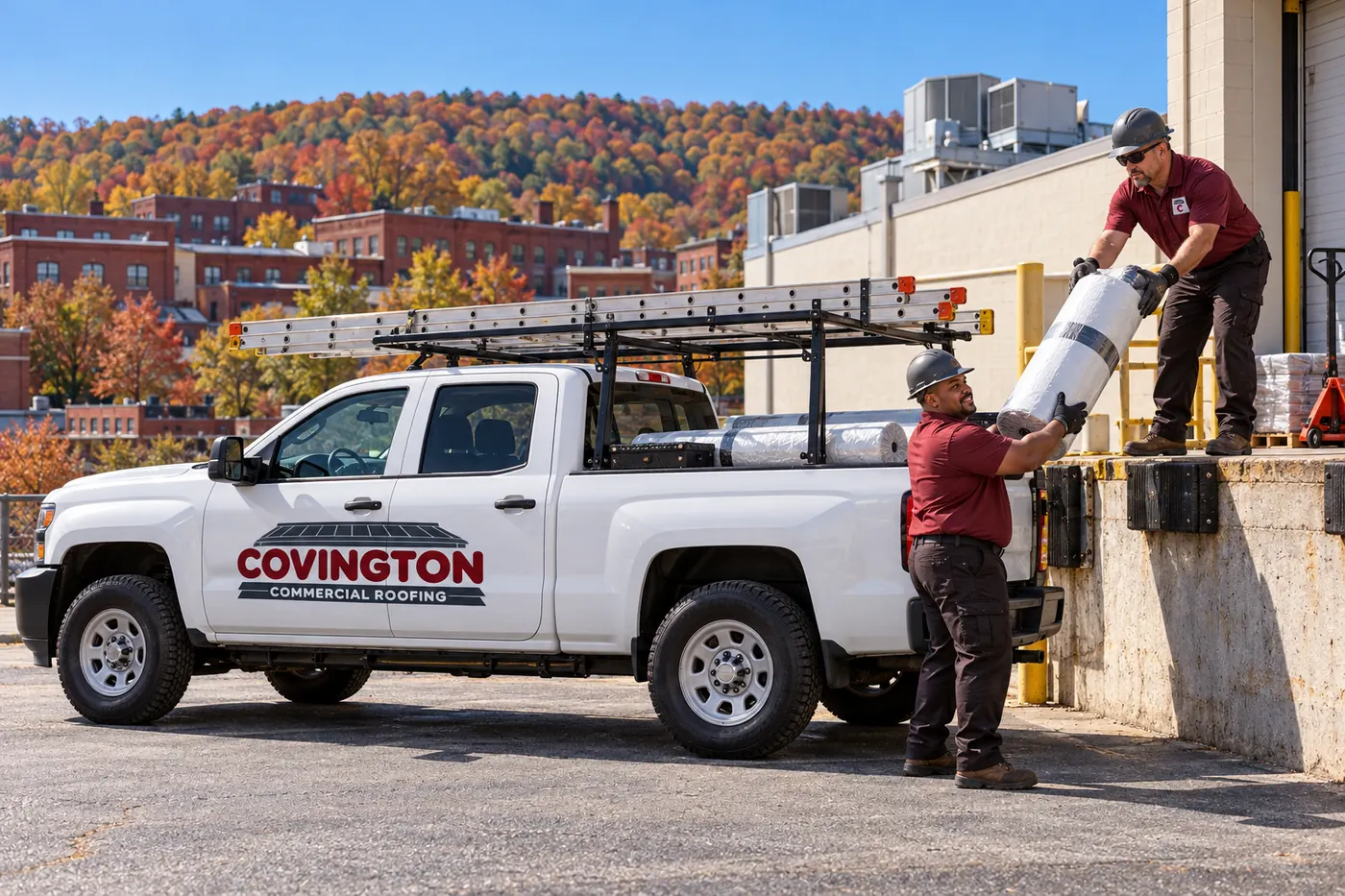
Bonding adhesive across the whole sheet suits odd shapes, high wind, and quiet interiors, within the adhesive’s temperature limits.
Stone or pavers hold the sheet on strong decks with parapets all around, though leak tracing means moving stone.
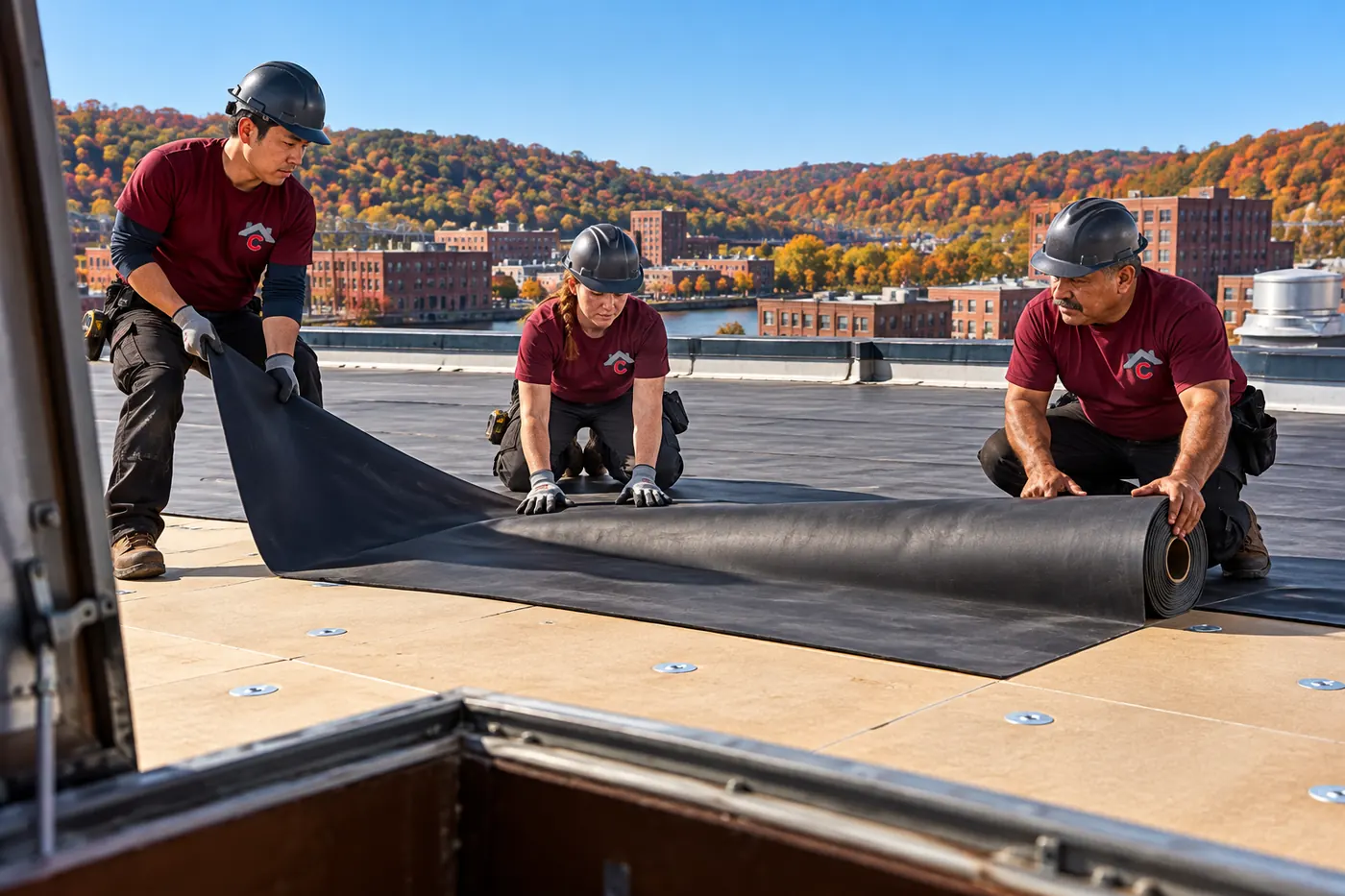
TPO earns its place on Covington roofs where cooled space, welded seams, and steady foot traffic all matter.
A white sheet reflects sunlight, so the deck and the space below take on less heat than under a black membrane.
Hot-air welds fuse overlapping sheets into one piece of plastic once cooled, with no tape or adhesive at the lap.
Heavier TPO and welded pads around units and hatches take service traffic without wearing through.
Reflectance values for specific TPO products are listed in the Cool Roof Rating Council directory.
Call us or request an estimate with the roof size and what sits under it. We will walk the roof and check the deck first.
TPO installs run section by section, with every seam tested before the crew moves on.
We check the deck, count curbs and drains, and scan for wet insulation that would have to come out before new TPO goes down.
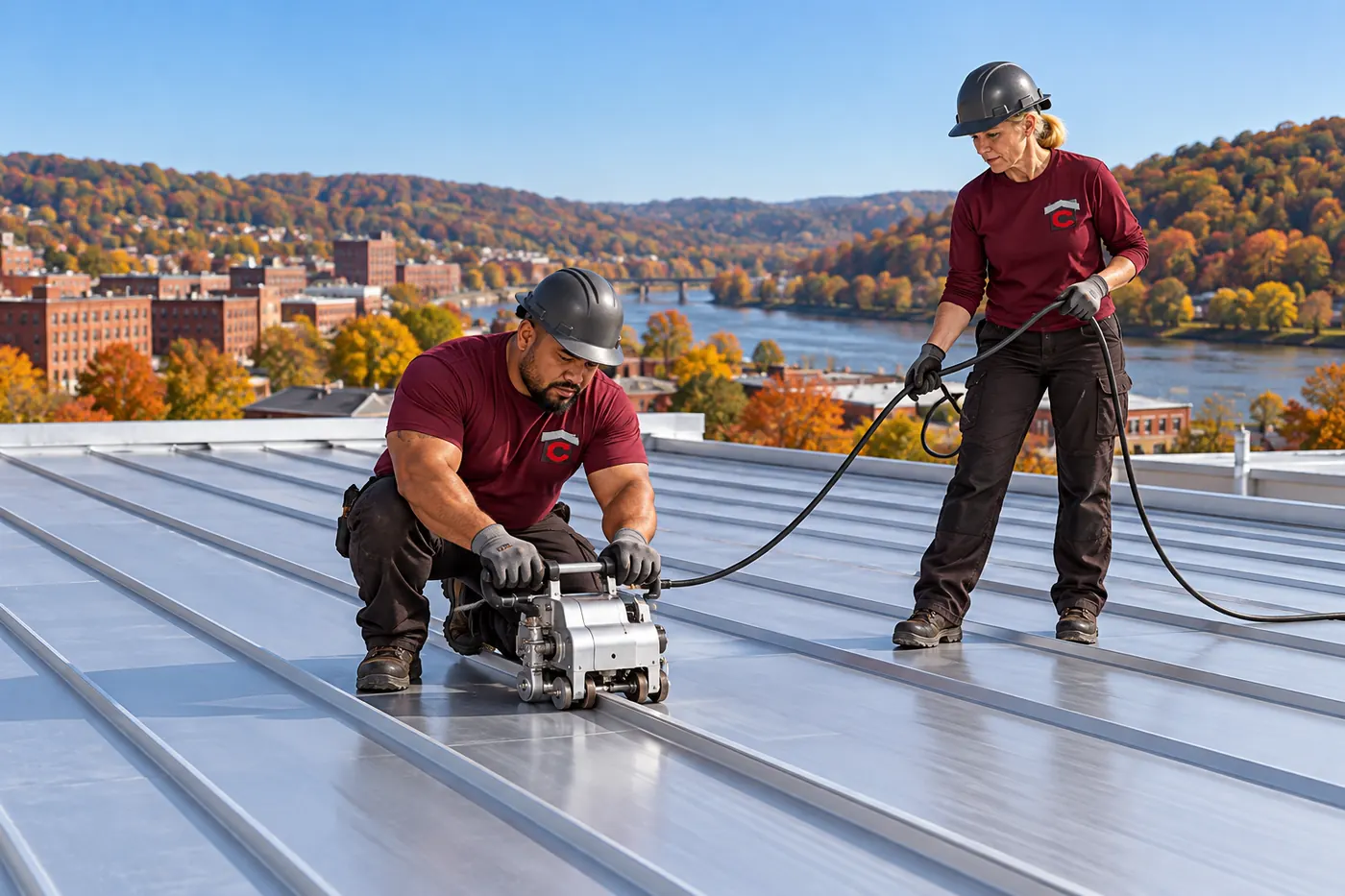
Tapered insulation moves water to drains, and cover board shields it from hail dents and boots.
Each morning a test weld is pulled apart to confirm heat and speed settings for that day’s temperature.
An automatic welder rides each lap, with hand welds at corners, curbs, and patches.
A blunt probe checks every seam, T-joints get patches, and cut samples are taken where the maker asks.
Some Covington roofs call for a different sheet or a different approach.
Flexible rubber for irregular roofs, ballasted roofs, and buildings heated more than cooled.
See EPDM Roofing →Grease-rated membranes and raised curbs for plant roofs with process exhaust.
See Industrial Roofing →Seam and flashing repairs for TPO roofs that still have dry insulation.
See Commercial Roof Repair →TPO is a thermoplastic polyolefin membrane rolled out in white sheets, with laps fused by hot air. Covington owners put it on warehouses, retail centers, offices, schools, and plants with low-slope roofs, and thicker sheets go where foot traffic around rooftop units is heavy.
All three cover a low-slope roof well. TPO and PVC are welded and usually white; EPDM is taped rubber and usually black, staying flexible in cold weather. Over cooled offices or warehouses TPO cuts heat gain, while grease from a restaurant fan points to PVC near the exhaust.
An automatic hot-air welder rides each lap after a daily test weld is peeled apart to confirm settings. Afterward a blunt probe runs along every seam to find gaps, crews look for a small bead of melted material at the lap edge, and T-joints get a welded patch.
The deck type, wind exposure, and the weight the structure can carry decide it. Mechanically attached sheets use screws and plates in the laps on steel or wood decks; fully adhered sheets bond across the whole surface and resist flutter on hilltop sites and roofs with many corners.
Curbs get membrane run up their sides and tucked under the unit’s counterflashing, pipes get pre-molded boots with clamps, and drains get a sump plus a clamping ring that grips the sheet. Walkway pads welded from the hatch to each unit protect the membrane from service traffic.
Yes, when only one roof is on the building and the insulation under it is dry. The old membrane gets a recovery board, then new TPO is welded over it. Wet areas found by scan are cut out first, and drains and curbs are raised to the new surface.
A low-pressure rinse once a year clears dirt that dulls the white surface, and debris around drains comes off by hand. Pressure washers and harsh cleaners scar the sheet, so maintenance crews stick to the maker’s list of approved products.
Send the roof size and what sits under it, and we will set up a roof walk.