Drainage
Uphill Water at the Wall
Water from the slope collects against the uphill wall where downspouts discharge.
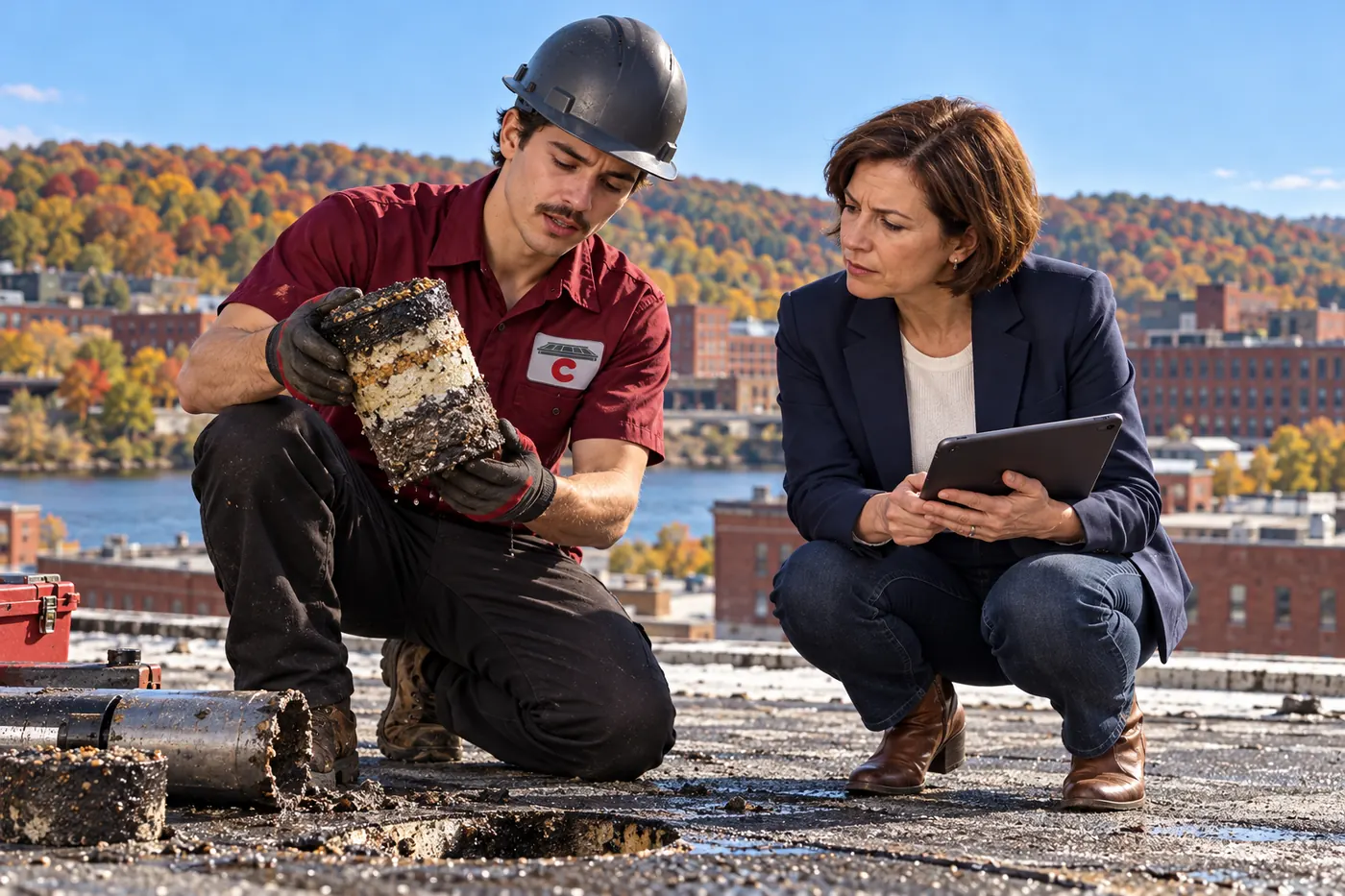
As a Fort Wright commercial roofing contractor, we replace roofs on hillside commercial lots near I-71/75, planning staging before tear-off starts.
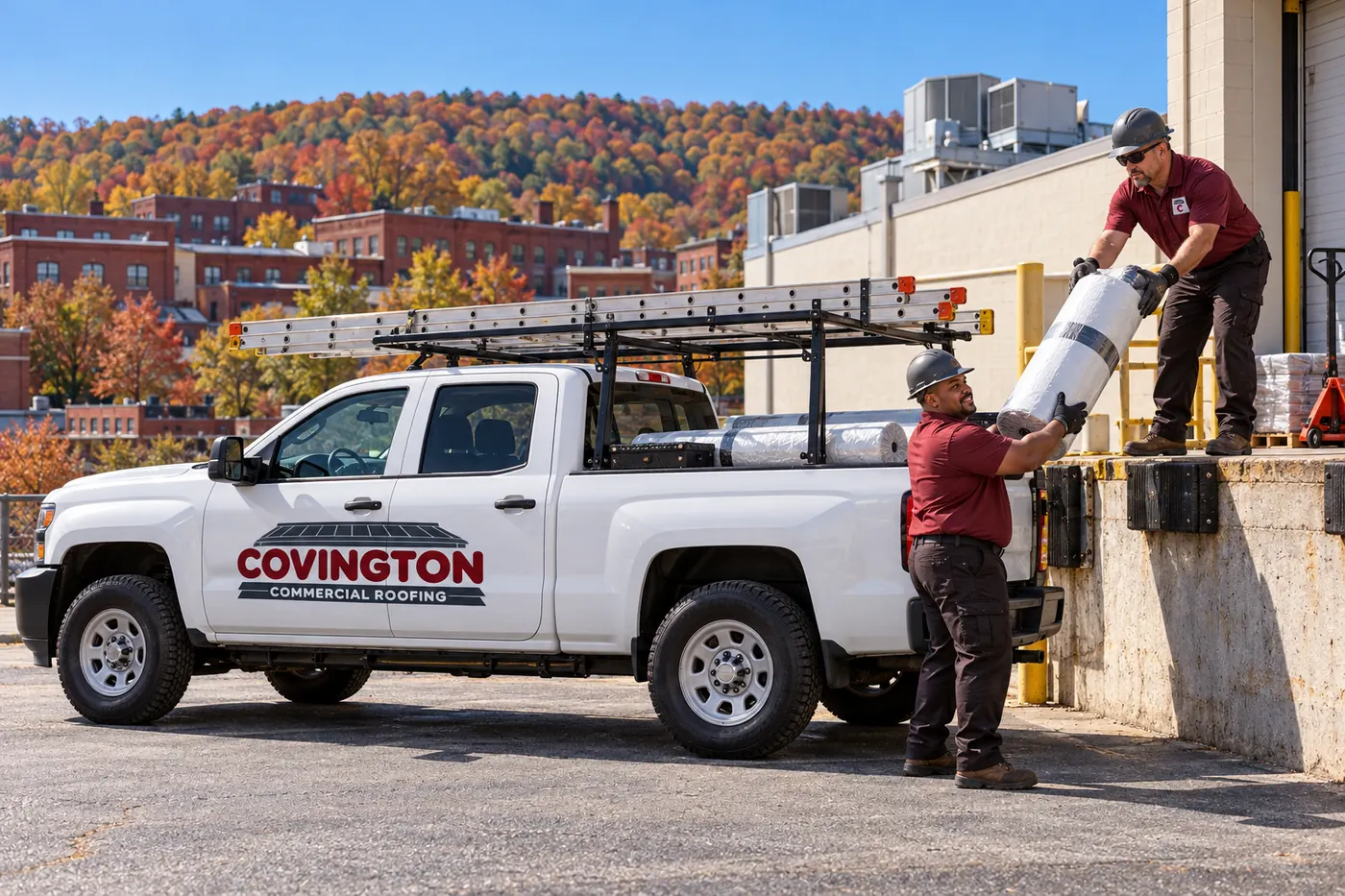
Staging is the practical challenge for a Fort Wright commercial roofing contractor. Much of the city’s commercial land is hilly and close to the I-71/75 corridor, so crane pads and dumpster spots get picked before anything else.
On the state’s Kenton County sheet, Fort Wright appears as “Ft Wright,” and PDS of Kenton County issues its building permits after any city zoning step.
Buildings set into slopes show these conditions.
Water from the slope collects against the uphill wall where downspouts discharge.
Edges above steep drives get less maintenance and loosen first.
Roofs facing open slopes take more sun and wind on the field sheet.
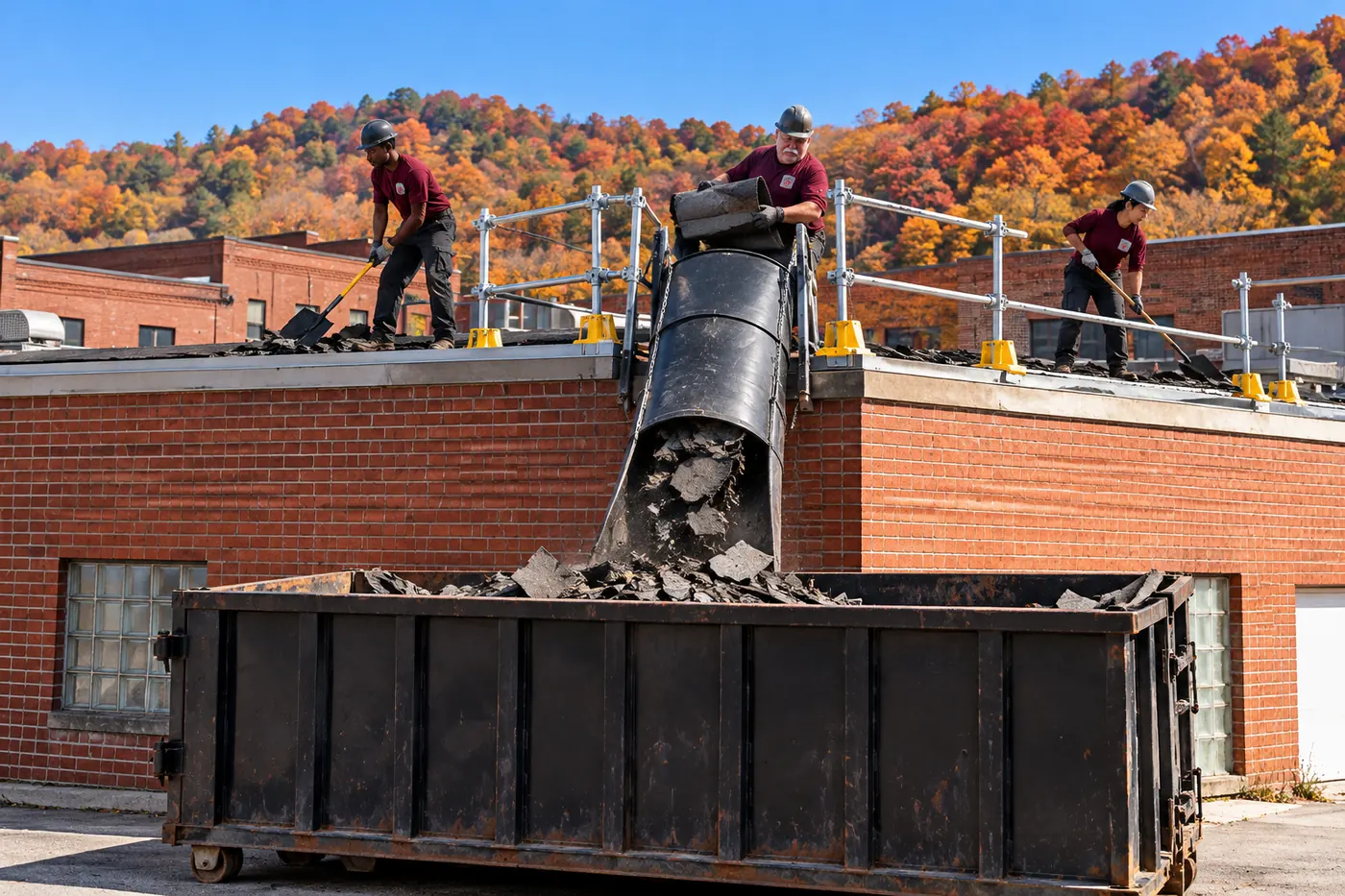
Long-running leaks rot wood decks or rust steel ones near the low edge.
Gutters on the downhill eave carry more water than they were sized for and spill at the corners.
Equipment stands set on the membrane without pitch pans leak at every leg.
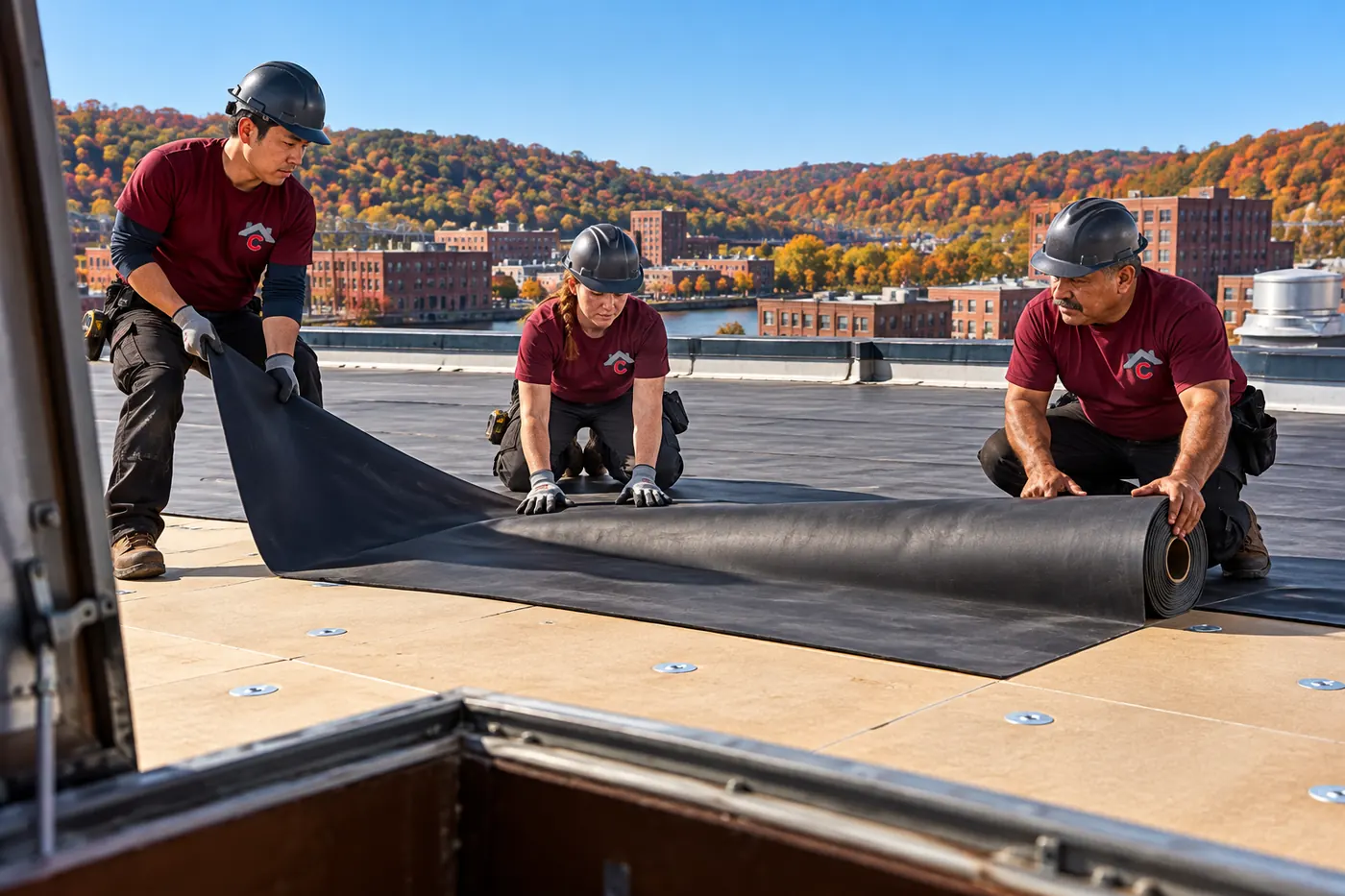
A Fort Wright replacement planned around the slope runs safer and cleaner.
Cranes and lifts sit on level paved ground picked during the inspection. No crane sits on a slope or a soft shoulder.
Dumpsters placed off drive slopes keep customer traffic moving. Delivery trucks keep a clear lane in and out.
Downspouts reset on the uphill side stop water pooling against the building. The base of the uphill wall stays dry after rain.
Soft or rusted deck panels get replaced once the old roof is off. Insulation goes down over a firm, dry base.
These options cover most Fort Wright commercial roofs.
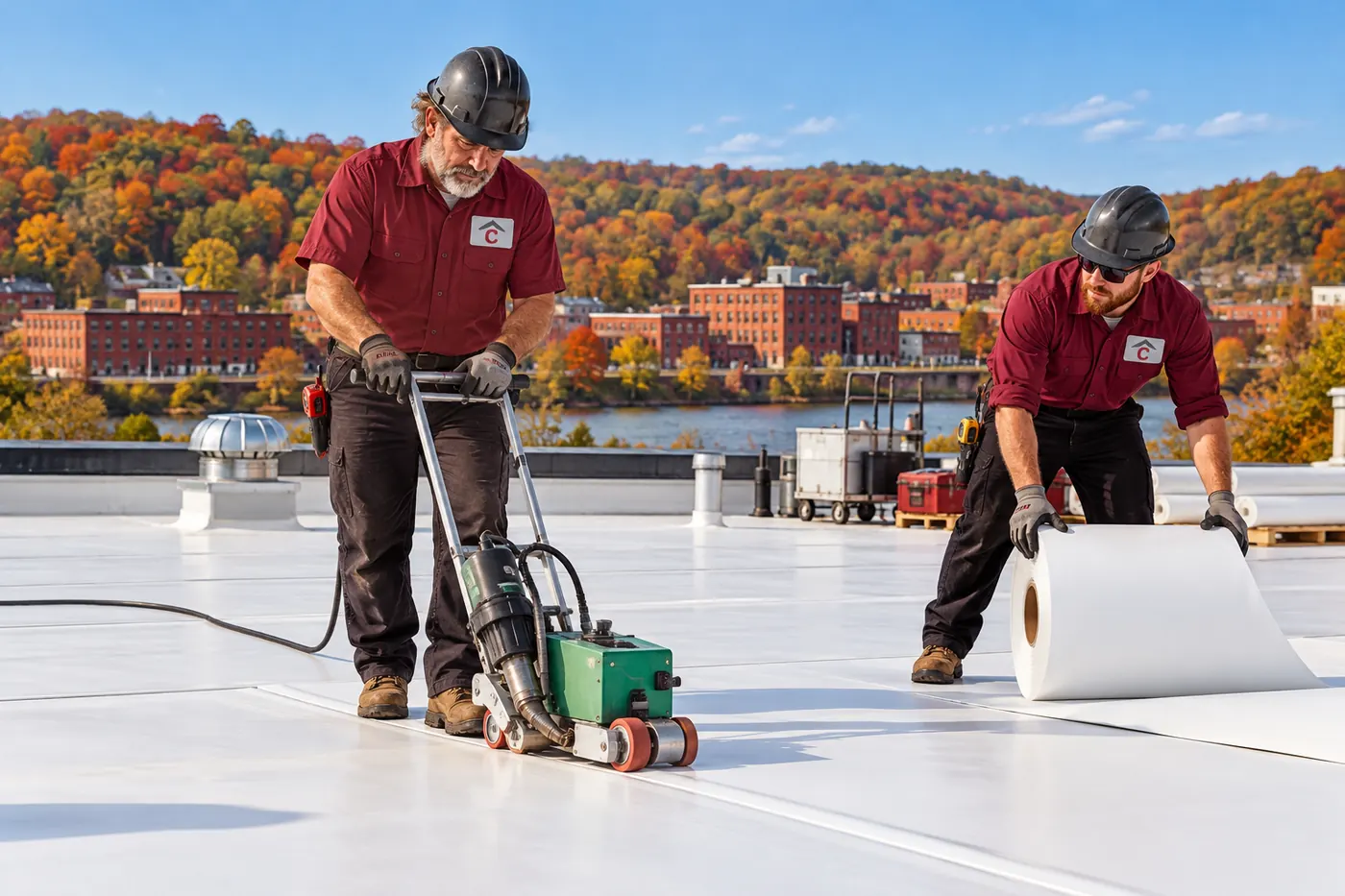
White welded membrane for offices and retail with cooled space below. Taper toward the low side matches the slope of the lot.
TPO Roofing →
New panels for pitched commercial buildings on sloped lots. Panels get fastened at the spacing printed by the maker.
Metal Roofing →Rubber membrane for roofs with many walls and offsets. Rubber flashing wraps the stepped walls of hillside additions.
EPDM Roofing →Taper toward drains on the low side of a hillside building. Downhill drains get sized for the water the slope sends them.
Flat Roofing →Call us. Downspout outlets and wall flashing get checked together.
Staging decisions come early on hillside jobs.
We walk the roof and the lot, marking level ground for cranes and dumpsters. Photos of the lot go into the staging plan.
Crane pads, dumpsters, and delivery times get agreed around busy access roads. Delivery windows avoid the busiest traffic hours.
After any city zoning step, PDS of Kenton County issues the permit. PDS reviews the scope once any city zoning step clears.
Tear-off, deck repair, insulation, and membrane go down section by section. Deck panels at the low edge get checked first.
Outlets on the uphill side are reset so water leaves the building. Splash blocks or leaders carry water clear of the wall.
Beyond Fort Wright, we take commercial roofing work in Covington and these towns.
Elsewhere near Fort Wright? Call us or send us a message.
Covington neighborhood shops and retail roofs.
Latonia Commercial Roofing →Industrial lots along the Licking River.
Wilder Commercial Roofing →Dixie Highway shops under wooded slopes.
Park Hills Commercial Roofing →Large retail and office roofs uphill.
Southgate Commercial Roofing →Equipment-heavy office and institutional roofs.
Highland Heights Commercial Roofing →Historic district roofs and riverfront blocks.
Newport Commercial Roofing →Riverside buildings west of Covington.
Ludlow Commercial Roofing →Retail roofs on the US 27 corridor.
Cold Spring Commercial Roofing →Hilltop buildings in steady wind.
Fort Thomas Commercial Roofing →Attached storefronts with party walls.
Bellevue Commercial Roofing →Low Ohio River lots, Kentucky code.
Dayton Commercial Roofing →Much of Fort Wright’s commercial land is hilly and near the I-71/75 corridor. Crane and lift pads need level paved ground, dumpsters stay clear of drive slopes, deliveries avoid busy access roads, and downspout outlets get reset on the uphill side.
PDS of Kenton County issues building permits for Fort Wright after any city zoning step. The state sheet lists the city as “Ft Wright.”
Cranes and lifts go only on level, paved ground picked during the inspection. Where none exists near the roof, a smaller lift or a conveyor takes material up.
Downspouts that empty on the uphill side send water back against the wall. Resetting outlets and checking wall flashing fixes both ends of the problem.
Most lots keep parking open, with a few spaces taped off near the crane and dumpster. Those spots get marked on the staging plan you approve.
Yes, on smaller roofs. A material conveyor or a lift on a level spot can raise insulation and membrane rolls where a crane has nowhere safe to set up. Larger roofs with heavy units still need a crane pad.
The downhill eave often carries water from the whole roof, so its gutters and downspouts get checked against that area. Oversized gutters or an extra downspout stop water spilling at the corners.
Long-running leaks rot wood decks and rust steel decks near the low edge of the building, where water collects before it drips. Those panels get replaced once the old roof is off, before insulation goes down.
Send the address, and we will walk the roof and the lot together.